
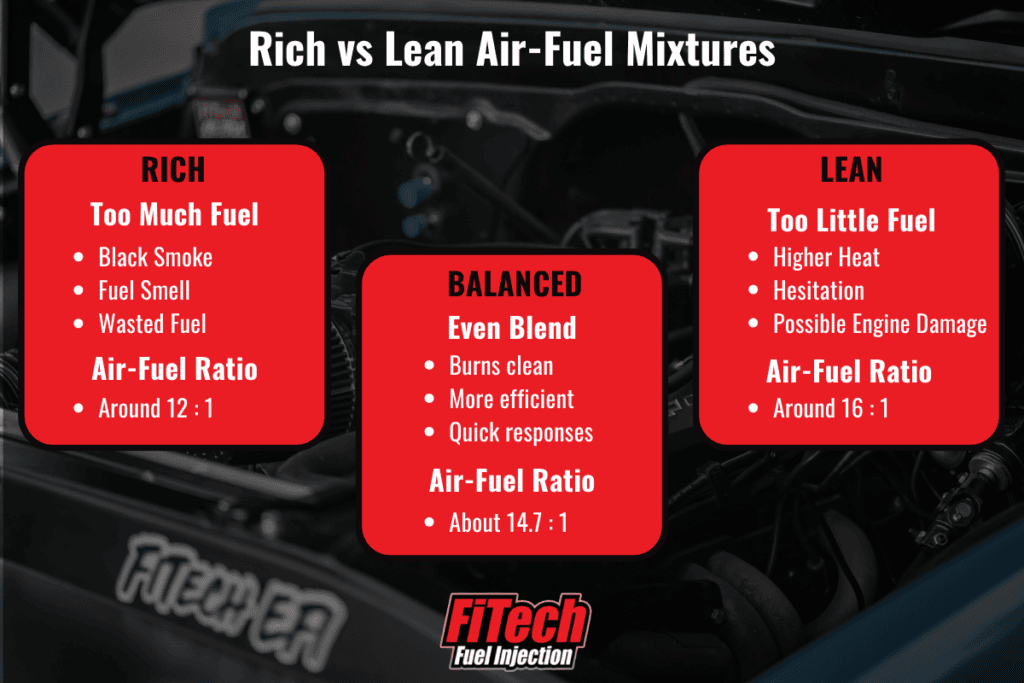
The Short Answer: An engine runs rich when the fuel mixture holds too much fuel for the air entering the combustion chamber. It runs lean when there is too little fuel for that air. For gasoline, the balanced fuel ratio is about 14.7:1, so a rich condition falls below that number and a lean condition sits above it.
Knowing the difference matters because each problem shows different symptoms and points to different parts. A rich condition wastes fuel and can foul a spark plug or overheat the catalytic converter. A lean condition runs hotter and can lead to engine damage if ignored.
The good news is that most causes are easy to track down once you know what to look for. This guide explains running rich vs lean in plain terms, shows you how to read the signs, and walks through the common causes and fixes for each. The same air and fuel rules apply to carbureted engines and modern EFI throttle body setups alike.
What Running Rich vs Lean Means
Your engine burns a blend of air and fuel inside each combustion chamber. The balance of that blend is the air-fuel ratio, often shortened to AFR. For pump gasoline, the balanced fuel ratio is about 14.7:1, which means 14.7 parts air to 1 part fuel. That balanced point is called stoichiometric.
The combustion process rarely stays at one number. At idle and cruise, the engine targets close to 14.7:1 for clean, efficient burning. Under full throttle, it wants extra fuel near 12.5:1 to make power and keep combustion temperatures safe.
- Running rich means the fuel mixture has more fuel than the air can fully burn. The AFR drops below 14.7:1, so a rich condition sits on the rich side of the scale. The leftover fuel leaves the engine partly unburned.
- Running lean means the mixture has less fuel than the air calls for. The AFR climbs above 14.7:1. A lean mixture burns hotter because there is not enough fuel to cool the charge.
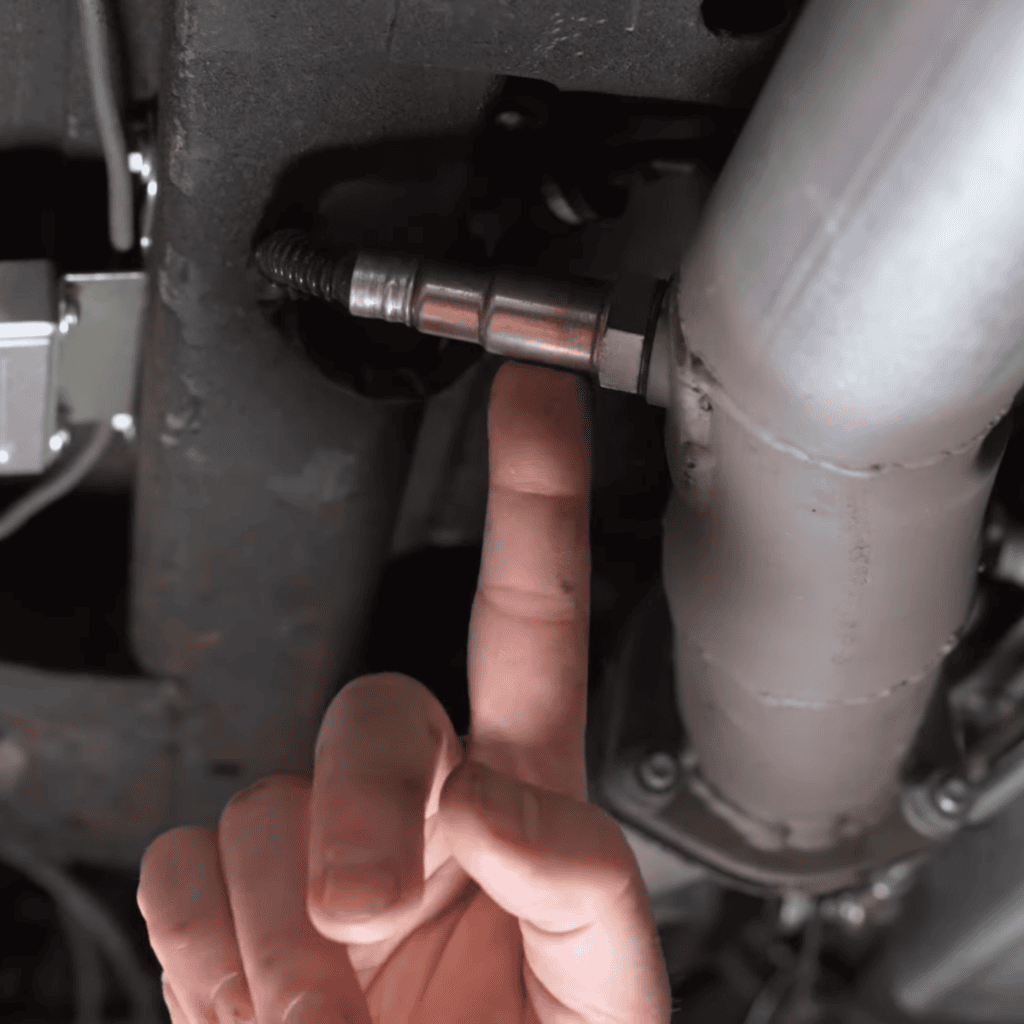
On an EFI system, an oxygen sensor in the exhaust pipe reads how rich or lean the engine is running. When the computer uses that reading to adjust fuel delivery on the fly, it is working in a closed loop. The system trims fuel up or down to hold the target AFR.
For a deeper look at AFR targets and closed-loop control, see FiTech’s EFI Tuning Basics and Handheld Controller Feature Definitions.
How to Spot a Rich or Lean Engine
You can often tell which way the fuel mixture is leaning before you plug in a scan tool. The signs show up in the exhaust, in performance, and on the spark plugs.
Signs of a Rich Condition
- Black smoke from the exhaust pipe, especially under throttle, because the extra fuel does not fully burn.
- A strong exhaust smell of raw gas.
- High fuel consumption and poor mileage, since the engine uses more fuel than it needs.
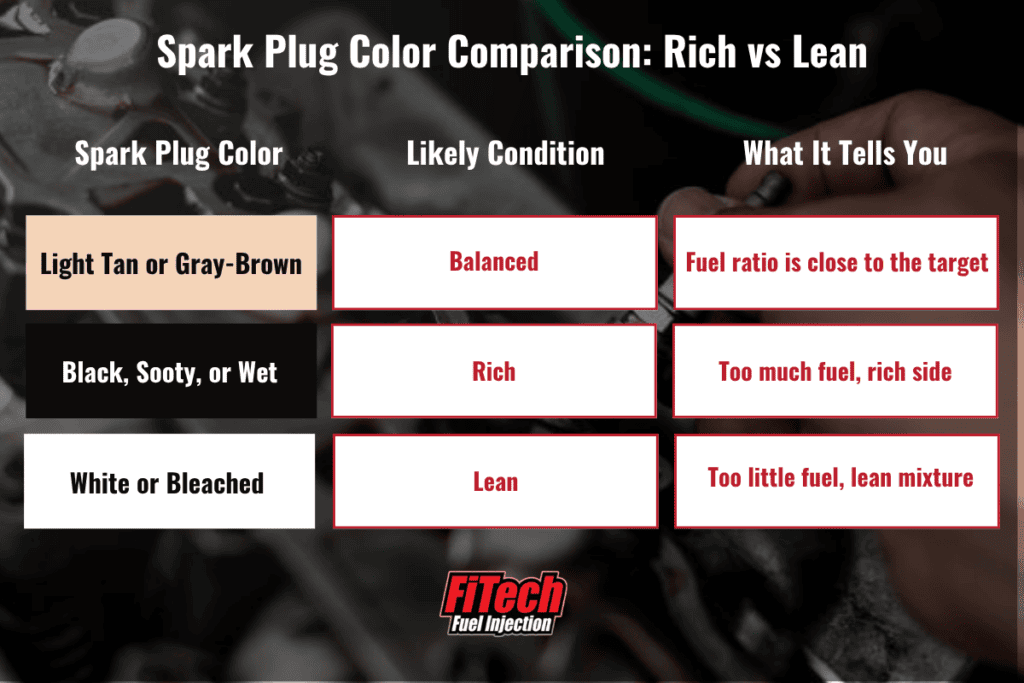
- Rough idle or fouled plugs. A spark plug pulled from a rich cylinder looks black and sooty.
- A failing catalytic converter over time because unburned fuel overheats it.
Signs of a Lean Condition
- Hesitation or stumble, often worse at lower rpm or on light throttle.
- Popping or backfiring through the intake.
- Ping or knock under load, which signals too much heat in the combustion chamber.
- Overheating, since a lean mixture runs hot.
- A light gray or white spark plug. A lean cylinder often shows a clean, bleached plug tip.
- A stored error code, such as P0171, system too lean, on OBD-II vehicles.
Reading the plugs is one of the fastest checks. Plug makers like NGK publish their own spark plug reading guide that ties plug color and deposits to the fuel mixture. Pull a plug, look at the tip, and compare it to the chart below.
One caution: a new plug needs some run time before it shows an accurate color. Read plugs after a steady drive, not right after a cold start. To confirm the sensor side, refer to this Sensor Diagnosis, which walks through testing the oxygen sensor and other inputs.
Common Causes and Fixes
Once you know which way the mixture is off, the cause usually falls into a short list. Work through the checks in order so you fix the real problem instead of masking it.
What Causes a Rich Condition and How to Fix It
Common causes:
- A faulty oxygen sensor feeds bad data, so the system adds extra fuel it does not need.
- Fuel pressure is set too high, which pushes more fuel through the injectors.
- A dirty or clogged air filter that chokes airflow and enriches the mixture.
- A stuck or leaking injector is dumping fuel.
- An AFR target set too rich, or a bad coolant temp sensor telling the computer the engine is still cold.
How to fix it:
- Scan for an error code and check the oxygen sensor reading against a known-good value.
- Test fuel pressure against spec. Bring it back down if it reads high.
- Replace a dirty air filter so the engine gets enough air.
- On an EFI system, confirm the AFR targets, then reset the learn so the computer relearns with good data. Learn more about this issue with these Basic Setup Instructions.
- Inspect the coolant temp sensor and wiring.
What Causes a Lean Condition and How to Fix It
Common causes:
- A vacuum leak. Unmetered air leans the mixture, raises idle speed, and can cause a surge at closed throttle. A cracked vacuum line or loose intake gasket is a common air leak.
- Low fuel pressure or a weak fuel pump means the engine cannot get enough fuel.
- A clogged fuel filter that limits fuel delivery is often felt most at higher rpm and full throttle.
- A dirty injector is spraying less fuel than commanded.
- A failing oxygen sensor reading lean and driving the wrong correction.
How to fix it:
- Find and seal vacuum leaks. With the engine idling, spray a little carb cleaner around the intake joints and each vacuum line. An RPM change points you to the leak. Work carefully and keep the spray away from heat and sparks.
- Test fuel pressure under load. Replace a clogged fuel filter or a weak pump that cannot supply fuel at high rpm.
- Clean or replace dirty injectors.
- Confirm the oxygen sensor works, since a lean reading drives the system to pull fuel. See Understanding and Mounting the O2 Sensor.
- Rule out the ignition system. A weak spark or worn plug can mimic a lean stumble even when the fuel ratio is fine.
- After repairs, let the EFI system relearn in closed loop, or adjust the target with Adjusting Target AFR.
A Note for Carbureted Engines
On a carburetor, mixture problems trace to jets and screws instead of sensors. A clogged pilot jet or a misadjusted pilot screw can lean out the idle circuit, while a worn main jet or a stuck float can richen the higher rpm range. The fuel screw sets the idle mixture on many carbs. Cleaning the passages with carb cleaner fixes a lot of these issues. Converting to a throttle body removes most of this guesswork because the EFI system manages fuel delivery and corrects the mixture for you.
Know Your Air-Fuel Ratio
Running rich means too much fuel and an AFR below 14.7:1, while a lean condition means too little fuel and an AFR above 14.7:1. Read your spark plugs and watch the exhaust to tell them apart: black smoke and a fuel smell point rich, while ping, overheating, and a white plug point lean. Most rich causes come down to the oxygen sensor, high fuel pressure, or a dirty air filter, and most lean causes come down to vacuum leaks, low fuel pressure, or a clogged fuel filter.
A FiTech EFI system takes much of this off your plate. The wideband oxygen sensor monitors the air-fuel mixture and lets the ECU trim fuel in closed loop to hold your target AFR through changing temperature, altitude, and engine load. Browse FiTech’s throttle body EFI systems or visit the Tech Center for more Tech Tuesday tutorials on dialing in your tune.