

The carburetor came off, the EFI throttle body went on, and the old pump suddenly can’t keep up. That stock mechanical fuel pump fed your carb at roughly 6 to 8 psi, which is fine for a Holley but nowhere near what fuel injection asks for. Most EFI systems want steady high pressure around 58 psi, and the mechanical pump bolted to the block has no way to make it. So before the first key turn, you face a decision a lot of builders never see coming: inline vs intank fuel pump.
An inline (external) electric fuel pump bolts to the frame, whereas an in-tank pump lives submerged inside the fuel tank. This guide walks through how each pump type works, gives a side-by-side comparison, explains how to match a pump to your build, and outlines the installation and maintenance habits that keep either one alive.
How Inline (External) Fuel Pumps Work
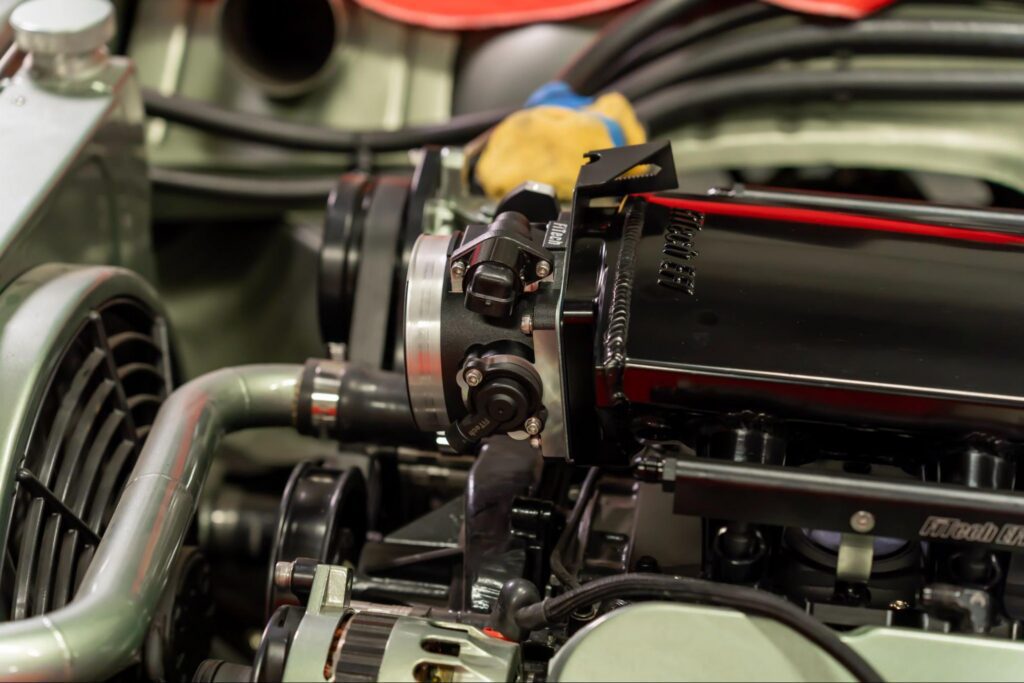
An inline fuel pump is an external electric pump mounted along the frame rail. It pulls fuel from the tank and pushes it forward to the fuel rail at the pressure the EFI system needs. The inline pump is gravity-fed, meaning it must be installed below tank level and as close as possible to the tank; otherwise, durability will be affected. Plumbing runs through a feed line up to the engine, with a return line carrying unused fuel back to the tank on most setups.
The appeal is simplicity. An external fuel pump bolts on without dropping the tank. It sits where you can reach it for service and works with a stock tank you already have. It also costs less up-front than converting to an in-tank arrangement, which makes it a common first step for a carb-to-EFI swap.
Things to Consider When Making the Decision
An in-line pump sits in open air, so it runs hotter than a submerged unit and is generally considered loud since it’s external with no fuel surrounding it to dampen noise. That exposure also raises the odds of vapor lock. It is more likely to pull air if the fuel level drops during hard acceleration or a long sweeping corner, since it relies on the tank pickup to keep it fed. Vehicle length matters too. The pump both pulls fuel from the tank and pushes it to the engine, so longer wheelbases mean more work for the pump in both directions. Inline pumps are best suited for short base vehicles like cars and short-bed trucks. Mount the pump low and close to the tank so it pushes fuel rather than sucks it, because electric pumps move fuel far better under push than under suction.
For a clean inline setup, the FiTech 50101 255 LPH In-Line Fuel Pump uses -8 inlet and -6 outlet fittings for straightforward plumbing and handles ethanol blends. If you want the pump, filter, and lines bundled together, the 50001 Go EFI In-Line Frame Mount Fuel Delivery Kit supports builds up to 650 HP.
How In-Tank Fuel Pumps Work
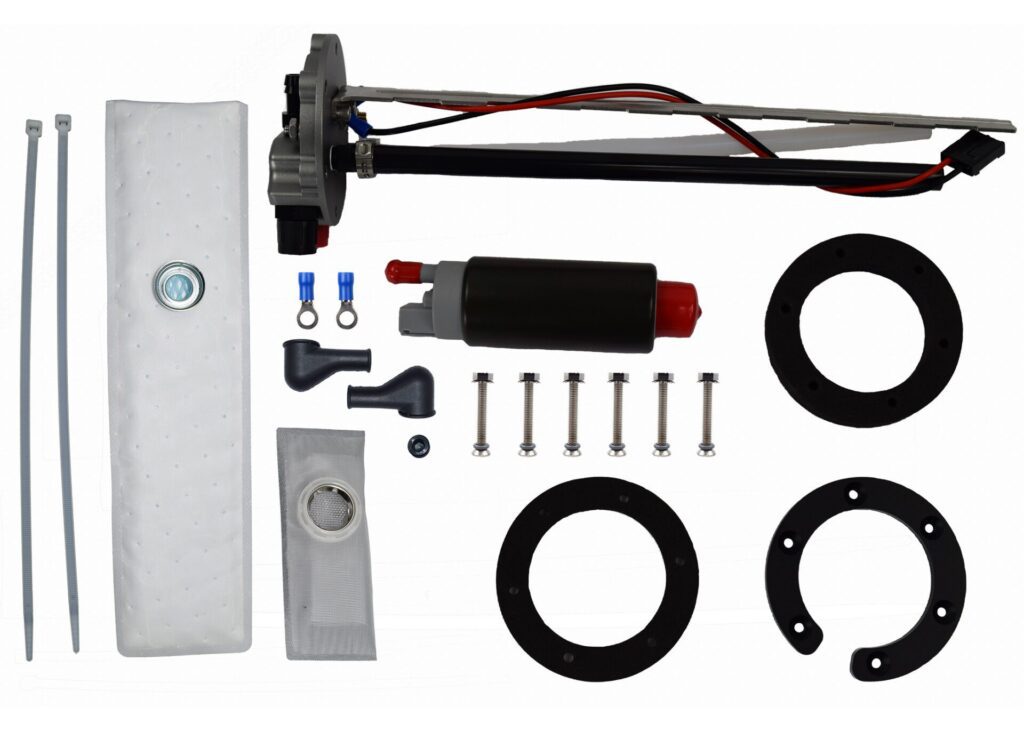
An in-tank pump sits inside the fuel tank, submerged in gasoline. You will find it as a factory-style fuel pump assembly, as a retrofit module that drops into a tank you already own, or built into an EFI-ready tank. Many late-model cars came from the factory with a Walbro or Bosch in-tank pump for the same reasons builders move in that direction today.
Running the pump on fuel pays off in a few ways. The gasoline keeps the pump cool, submersion muffles the noise, and a steady pickup inside the tank cuts down on vapor lock and fuel starvation. The engine bay stays cleaner too, with no external pump hanging off the frame rail.
The catch is the install. A standard in-tank pump needs either an EFI-ready tank or a retrofit module to adapt your stock tank, and the tank usually has to come out to fit it. Standard modules also run a return line back to the tank.
Regulated vs. Returnless In-Tank
One distinction worth understanding before you buy: regulated versus returnless. A regulated in-tank module carries a built-in 58 psi regulator and runs a single fuel line with no return, which means fewer fittings and a simpler routing job. A standard module skips the onboard regulator and leans on the regulator inside a FiTech throttle body to hold pressure.
FiTech covers both paths. The 50015 Go-Fuel Universal In-Tank Pump Module 340 LPH and the 50102 340 LPH In-Tank Pump handle standard returnable setups, while the 50017 and 50018 Go Fuel In-Tank Regulated Pumps (255 and 340 LPH) carry the 58 psi regulator built in and back it with a 3-year limited warranty. Browse the full In-Tank Retrofit Kit category to match a module to your tank depth.
Inline vs In-Tank: Side by Side
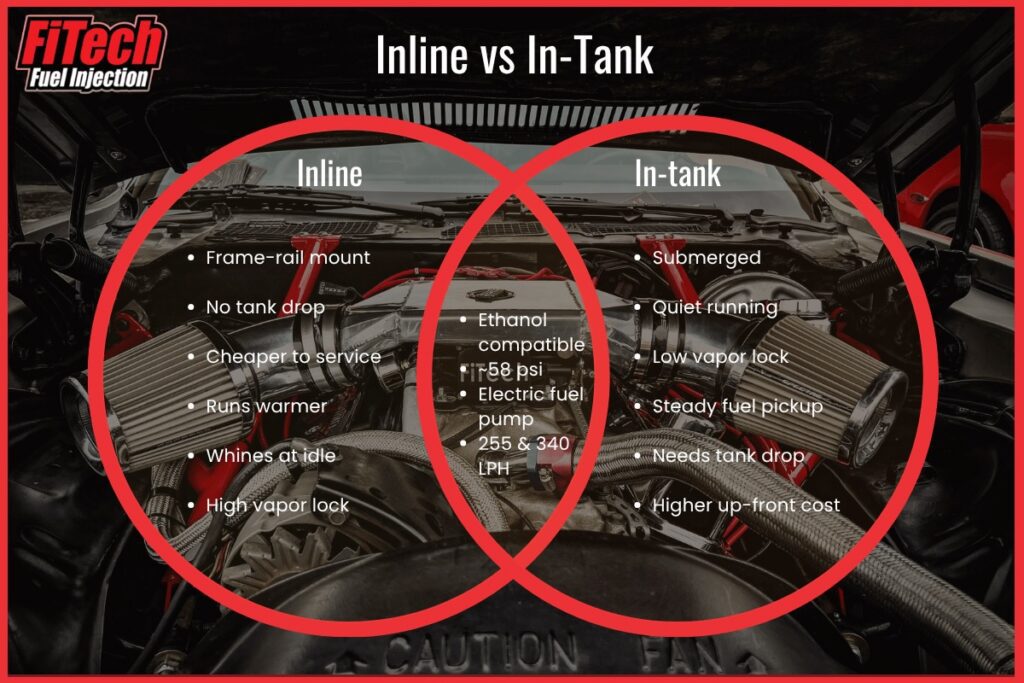
Both pump types deliver the high pressure an EFI system needs. The difference is in how they live with heat, noise, and the demands of driving. Here is how they stack up across the factors that actually decide the build.
There is a middle ground for builders who do not want to drop the tank at all. The FiTech Force Fuel System connects to your existing stock mechanical or electric fuel pump and feeds the EFI through an internal 340 LPH pump. No new feed line from the tank, no major plumbing, just enough high-pressure flow to run injection.
At the high-horsepower end, or on a car that corners hard and runs the tank low at a track, a surge tank answers the starvation problem. A low-pressure lift pump fills a small surge tank, and a second pump pulls from that reservoir to feed the fuel rail. Even when the main gas tank sloshes away from the pickup, the surge tank keeps a steady column of fuel ready, so fuel flow to the engine never blinks.
Matching the Pump to Your Build
Pump choice follows the build, not the other way around. A daily driver and a bracket car ask different things from the fuel system.
For a daily driver or mild street car, a 255 LPH pump in either configuration covers most builds up to roughly 650 HP and keeps things quiet and simple. Step up to a 340 LPH pump for a street/strip or bracket car with a modified engine making more power than stock, since the extra flow gives you headroom instead of running the pump at its ceiling. For an LS swap, an EFI-ready tank or an in-tank module pairs cleanly with a throttle-body LS kit and keeps extra plumbing out of the bay. Running a custom tank or fuel cell? The 50019 Go Fuel Returnless Module fits most cells with a 12-bolt flange, runs on a single line, and supports up to 800 HP.
What are the LPH Ratings
A quick word on LPH ratings, since they drive the whole decision. LPH means liters per hour, the pump’s flow capacity. You size it to your horsepower target with margin to spare, never right at the edge, because a pump asked to run flat out all the time wears faster and leaves nothing in reserve. A quality pump with a little extra capacity is cheaper than a roadside breakdown.
One reason FiTech kits make this easier: a delivery kit bundles the pump, fuel filter, fittings, and lines in one box, so you are not piecing a fuel system together from a parts bin and hoping the fittings match.
Installation and Maintenance Best Practices
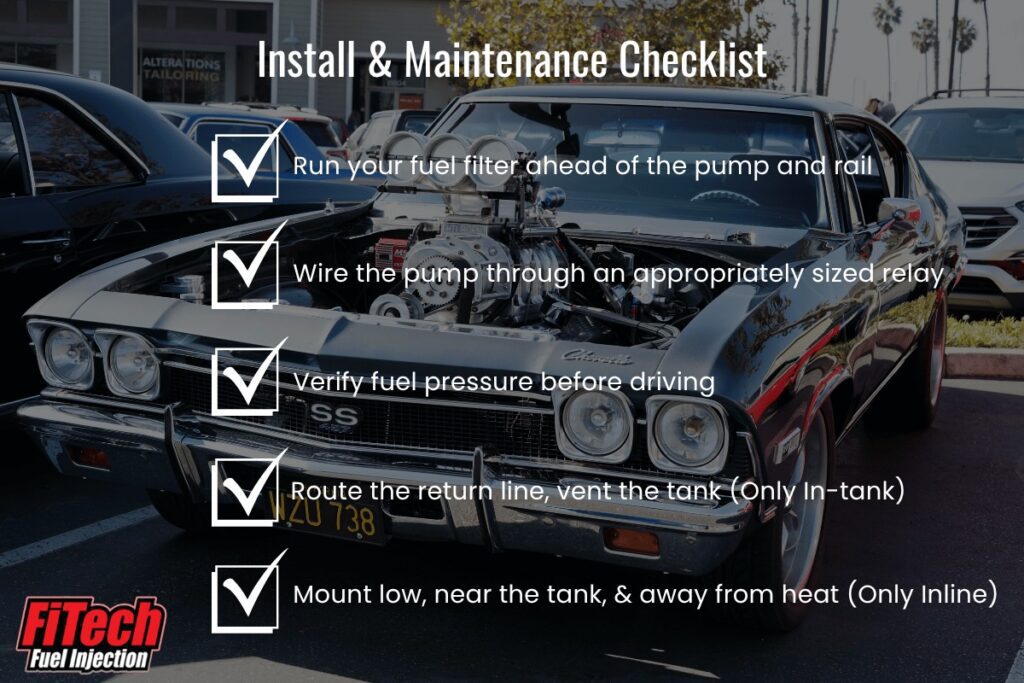
A few habits keep both pump types healthy, no matter which side of the inline vs in-tank question you land on.
- Always run a fuel filter ahead of the pump and the rail.
- Wire the pump through a relay sized for its current draw rather than running it straight off a switch, which protects the wiring and the pump alike.
- Before the first real drive, confirm fuel pressure with a gauge so you know the system holds its target instead of guessing.
- On a standard in-tank module, route the return line correctly and, if the tank sits inside the car, vent it to the outside so fumes stay out of the cabin.
- For an inline pump, mount it low and near the tank and keep it away from exhaust and other heat sources.
FiTech’s video library walks through most of this on camera. The Tech Center hosts Tech Tuesday episodes, including Fuel Delivery Options (EP67), How to Install an In-Tank Fuel Pump Module (EP32), Installing the In-Tank Returnless Module (EP64), Fuel Pressure Regulator (EP66), Installing and Routing Fuel Lines (EP68), and Diagnosing a Clogged Fuel Filter (EP77).
Find the Fuel Pump Set Up That Fits Your Ride
An inline pump wins on simplicity, access, and cost. An in-tank pump wins on heat, noise, and steady delivery. The Force Fuel System and a surge tank cover the cases in between, from a builder who wants to skip the tank drop to a racer chasing every bit of flow under load. There is no single right answer, only the pump that fits how your car is built and how you drive it.
Ready to pick one? Browse FiTech’s fuel delivery kits and the Tech Center video library, or call FiTech tech support at 951-340-2624, option 2, to confirm the right pump for your horsepower target.