
The Short Answer: Fuel injectors get clogged when carbon deposits, dirt, or varnish build up on the injector tip and restrict fuel flow. Common causes include dirty fuel, poor filtration, ethanol-blended fuel sitting in the system, and short trips that don’t let the engine fully warm up. A clogged fuel injector can cause rough idling, engine misfires, poor fuel economy, and a check engine light. Many injector problems can be prevented with proper filtration and regular maintenance.
Fuel injectors are precision components. They open and close multiple times per second to spray a controlled dose of fuel into the combustion chamber or intake manifold. When a dirty injector or clogged injector restricts that spray, the engine doesn’t get the fuel it needs and performance suffers.
The good news is that many injector issues are preventable, and some can be fixed without having to replace the injector at all.
What Causes Fuel Injectors to Clog
Dirty or Contaminated Fuel
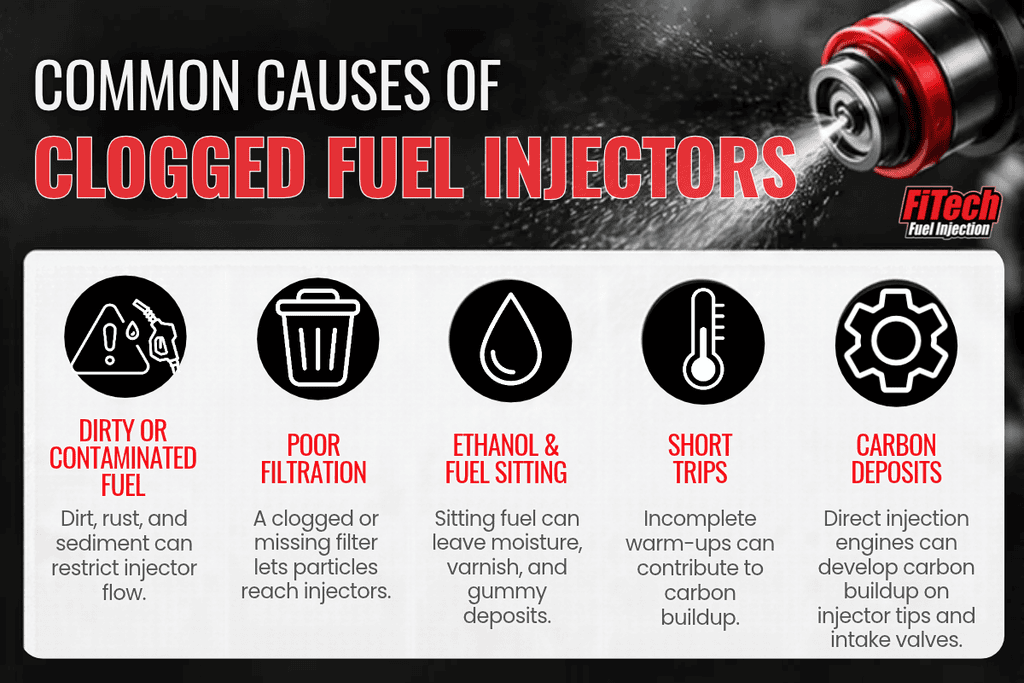
The fuel itself is the most common source of injector problems. Dirt, rust particles, and sediment that make it past the fuel filter can lodge in the injector’s tiny openings, build up over time, and restrict fuel flow. Older vehicles with original fuel tanks are especially prone to this because rust and sediment can accumulate in the tank over decades.
Low-quality fuel with insufficient detergent additives also contributes to carbon deposit buildup on the injector tips. Over time, those deposits narrow the openings and change the spray pattern, which affects how fuel enters the combustion chamber.
Poor Filtration
A fuel system without proper filtration is asking for injector problems. The fuel filter is the primary defense between contaminated fuel and the injector. When the filter is clogged or missing, fuel can get stuck or particles can pass straight through to the fuel rail and into the injectors.
EFI systems typically use two stages of filtration. A pre-filter catches large particles before they reach the fuel pump, and a post-filter catches finer particles before fuel reaches the fuel rail and injectors. Skipping either one shortens injector life and can lead to clogging.
Ethanol and Fuel Sitting Idle in the System
Modern fuel contains ethanol, which absorbs moisture over time. If fuel sits in the fuel line and fuel rail for weeks or months without the engine running, the ethanol breaks down and leaves behind varnish and gummy deposits that coat the injector tips. It can also loosen existing deposits in the tank and fuel line, adding additional clogs to the filter.
This is common on classic cars, hot rods, and seasonal vehicles that sit for extended periods between drives. The longer fuel sits, the more buildup you’re likely to find on the injectors when you start chasing injector issues.
Short Trips and Incomplete Warm-Up Cycles
Short trips that don’t let the engine reach full operating temperature can contribute to carbon buildup on the injector tips and inside the combustion chamber. When the engine doesn’t get hot enough for long enough, fuel residue doesn’t burn off completely and accumulates over time.
Carbon Deposits on Direct Injection Engines
On a direct injection engine, fuel sprays directly into the combustion chamber instead of onto the intake manifold or intake valve. Because fuel never washes over the intake valves, carbon buildup on those valves is a known issue on DI engines. Port injection and throttle body injection don’t have this specific problem because fuel passes through the intake manifold before entering the combustion chamber.
Signs of a Clogged Fuel Injector
A dirty fuel injector or clogged fuel injector can cause symptoms that overlap with other fuel systems and ignition issues. Before replacing injectors, check the fuel pump, fuel filter, spark plugs, and spark plug wires to rule out other causes.
Common signs of a clogged injector include:
- Rough idling or unstable idle speed
- Engine misfires, especially at idle or under light load
- A related misfire code or check engine light (P0200-P0208 for injector circuit, P0300-P0308 for cylinder misfires)
- Poor fuel economy with no other explanation
- Hesitation or stumbling on acceleration
- A noticeable drop in engine performance and fuel efficiency
- Fuel smell from unburned fuel reaching the exhaust
If one cylinder is consistently misfiring, swap the suspect injector to a different cylinder. If the misfire follows the injector, that injector is likely the problem.
How to Fix Clogged Fuel Injectors
Fuel Additive and Injector Cleaner
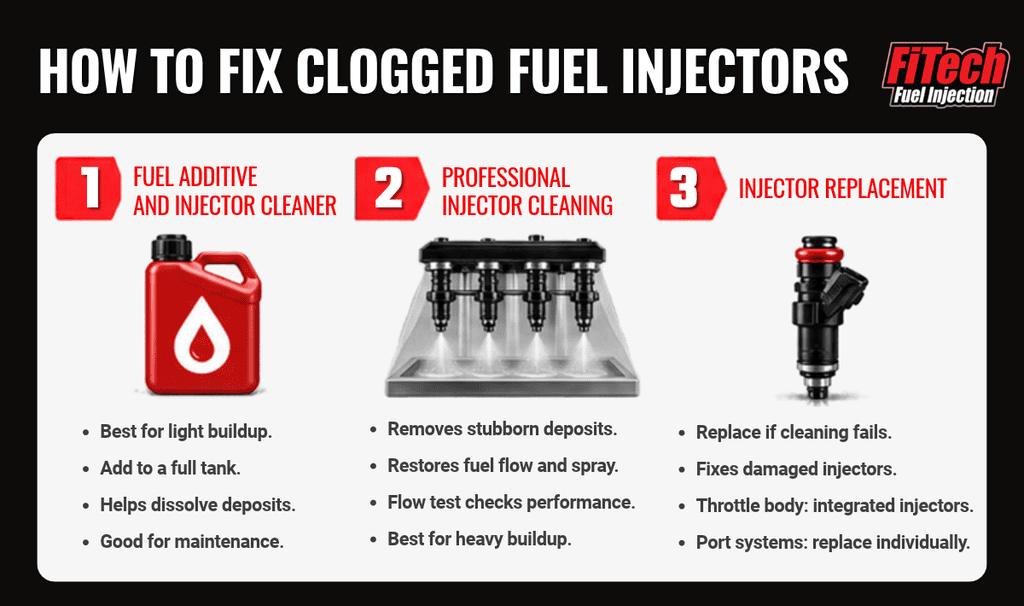
For light buildup, a quality fuel injector cleaner or fuel additive run through a full tank of fuel can help dissolve carbon deposits and restore fuel flow. This is the easiest and cheapest first step. Pour the cleaner into a full tank, drive normally, and let it work through the system on its own.
Fuel system cleaners work best as preventative regular maintenance. They’re less effective on heavily clogged injectors that have been neglected for a long time.
Professional Injector Cleaning
If a fuel additive doesn’t resolve the injector issue, the injectors may need professional cleaning. This typically involves removing the injectors from the fuel rail and running them through an ultrasonic cleaning process that breaks up stubborn deposits. A flow test afterward confirms each injector is spraying the correct amount of fuel with a proper spray pattern.
Professional injector cleaning is more effective than additives for a bad injector or heavily clogged fuel injector because it addresses deposits on the inside of the injector that fuel additives can’t always reach.
Injector Replacement
If cleaning doesn’t restore proper fuel flow, the injector needs to be replaced. A bad fuel injector with internal damage, a stuck pintle, or electrical failure won’t respond to cleaning. On our throttle body EFI systems, the injectors are integrated into the throttle body. On Go Port systems, individual injectors mount at each intake port in the fuel rail and can be replaced individually. Find the solution that works best for your build and get your ride rolling smooth again.
How to Prevent Clogged Fuel Injectors
Most injector problems are preventable with proper fuel system maintenance:
- Use two-stage filtration. A pre-filter before the fuel pump and a post-filter before the fuel rail. Our Force Fuel system and master kits include proper filtration matched to the fuel delivery setup
- Replace the fuel filter on schedule. A clogged fuel filter forces contaminated fuel past the filtration and into the injectors
- Don’t let fuel sit for extended periods. If the vehicle sits between drives, use a fuel stabilizer or run the engine periodically to cycle fresh fuel through the system
- Use quality fuel. Fuel with adequate detergent additives helps keep injectors clean. Low-quality fuel contributes to faster carbon deposit buildup
- Run a fuel additive periodically. A fuel injector cleaner every few thousand miles can help prevent the kind of gradual buildup that leads to dirty fuel injector issues down the road
- Avoid running on low fuel levels. Sediment settles at the bottom of the fuel tank. Running on low fuel pulls that sediment into the fuel line and toward the injectors
Call our tech team at (951) 340-2624 if you’re not sure which filtration setup fits your build or if you need help diagnosing an injector issue.
Frequently Asked Questions
How do I know if my fuel injectors are clogged?
The most common signs of a clogged fuel injector are rough idling, engine misfires, poor fuel economy, hesitation on acceleration, and a check engine light with a misfire code. If one cylinder is consistently misfiring, swapping the injector to a different cylinder can confirm if that specific injector is the problem.
Can I clean fuel injectors without removing them?
You can clean fuel injectors without removing them, yes. A fuel injector cleaner or fuel additive added to a full tank works well for light carbon deposit buildup and as preventative maintenance. For heavily clogged injectors, professional cleaning with the injectors removed is more effective.
How often should I clean my fuel injectors?
There’s no set interval for cleaning fuel injectors. It depends on fuel quality, filtration, and how often the vehicle is driven. Running a fuel additive every 3,000 to 5,000 miles as part of regular maintenance can help prevent buildup. If you’re seeing symptoms of a dirty injector, clean them sooner.
Does ethanol fuel clog fuel injectors?
Ethanol fuel doesn’t directly clog fuel injectors, but it does absorb moisture and break down faster than pure gasoline. When ethanol-blended fuel sits in the fuel system for extended periods, it can leave behind varnish and deposits that restrict fuel flow through the injectors.
Can a clogged fuel injector damage my engine?
A clogged fuel injector can damage your engine over time, yes. A clogged injector causes a lean condition in the affected cylinder, which can lead to engine misfires, elevated combustion temperatures, and potential engine damage. A single dirty fuel injector running lean while the other cylinders run normally puts uneven stress on the engine. Addressing injector problems early avoids more costly repairs later.
What’s the difference between a dirty injector and a bad injector?
A dirty injector has carbon deposits or debris restricting fuel flow but can often be restored with injector cleaning. A bad fuel injector has an internal electrical failure, a stuck pintle, or physical damage that cleaning can’t fix. A bad injector needs to be replaced.