
The Short Answer: If your fuel pump is failing, the engine isn’t getting enough fuel to run right. The most common bad fuel pump symptoms are engine sputtering or losing power under load, hard starts or long cranking, a whining noise from the gas tank, stalling at operating temperature, a sudden drop in fuel economy, and the engine not starting at all. Catching these symptoms early can save you from a complete fuel pump failure on the road.
How a Fuel Pump Works
A failing fuel pump doesn’t always die all at once. It usually gives warning signs first. The problem is that fuel pump symptoms overlap with other issues like a clogged fuel filter, a bad fuel pressure regulator, or even a vacuum leak. Before you start replacing parts, knowing what a failing pump actually looks and sounds like can help you diagnose the issue before disaster strikes.
The fuel pump’s job is to move fuel from the tank to the engine at the right pressure and flow rate. On a carbureted engine, a mechanical pump pulls fuel at low pressure, typically 4 to 7 PSI. On an EFI system, an electric fuel pump delivers fuel at around 58 PSI through a pressurized fuel line to the fuel rail and injectors.
On most EFI-equipped builds, the electric pump sits inside the gas tank as part of a pump assembly. The fuel surrounding the pump acts as a coolant. A healthy fuel pump delivers steady fuel pressure and consistent fuel delivery at idle, cruise, and under heavy load. When a pump starts to fail, it can’t maintain that, and the engine feels it.
FiTech Tip: Running on low fuel level consistently is one of the fastest ways to kill an electric pump because the motor isn’t submerged and runs hot.
6 Signs Your Fuel Pump Is Failing
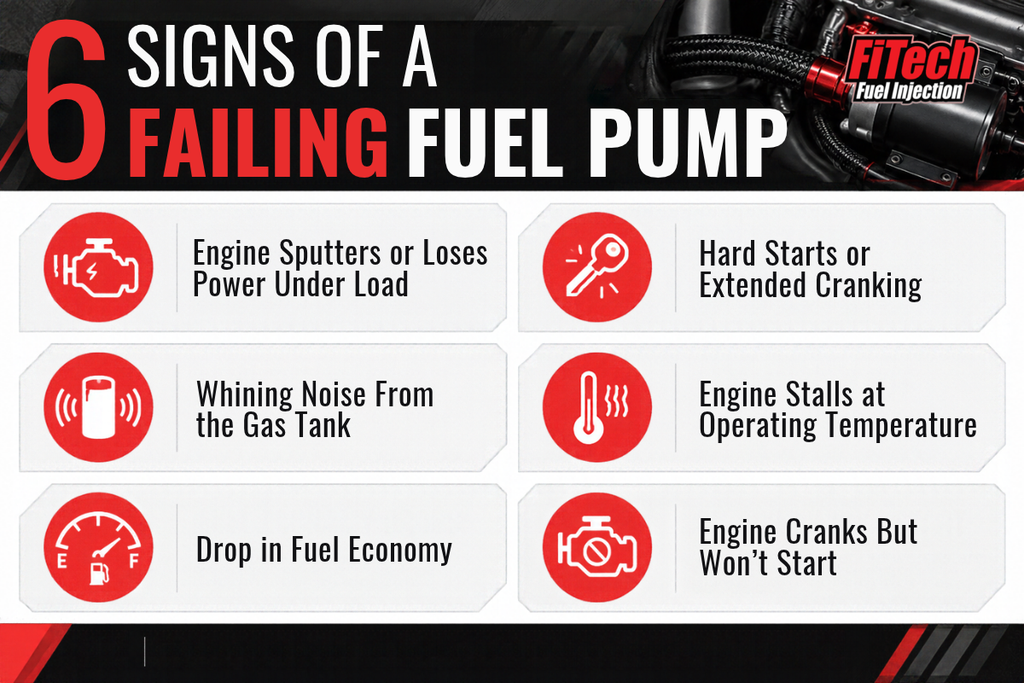
1. Engine Sputters or Loses Power Under Load
The engine runs fine at cruise but sputters, hesitates, or loses power when you accelerate hard or pull a heavy load. A weak fuel pump can maintain enough fuel pressure at low demand but can’t keep up when the engine needs more. This is often the first symptom of a failing fuel pump.
2. Hard Starts or Extended Cranking
The engine cranks longer than normal before it fires, especially after the car has been sitting. A failing pump may take longer to build pressure in the fuel rail, or it may not hold residual pressure after shutdown. If you don’t hear the pump prime when you turn the key, the pump may not be building pressure fast enough.
Hard starts can also point to a clogged fuel filter, a leaking fuel pressure regulator, or a bad fuel pump relay. Rule those out before assuming the pump itself is the problem.
3. Whining Noise From the Gas Tank
A healthy fuel pump makes a low hum that’s barely noticeable. A failing pump often produces a louder whining noise from the tank area, indicating worn bearings or a motor working harder than it should. The noise can get worse when the fuel level is low because the pump isn’t fully submerged and is running hotter.
4. Engine Stalls at Operating Temperature
The car starts fine when cold but stalls after the engine reaches operating temperature, especially in traffic or at idle. A weak pump that’s already borderline can’t maintain enough fuel pressure as heat builds in the system. This symptom overlaps with vapor lock on carbureted setups, but on an EFI system it usually points to a faulty fuel pump losing output as it heats up.
5. Drop in Fuel Economy
A failing fuel pump can cause inconsistent fuel pressure, which forces the ECU to compensate with longer injector pulse widths. The engine runs richer than it should, and you burn more fuel per mile. If your fuel consumption has climbed over several fill-ups with a full tank showing less range than before, check fuel pressure with a fuel pressure gauge at the fuel rail.
6. Engine Cranks But Won’t Start
This is the final stage of fuel pump failure. The engine cranks but won’t fire because no fuel is actually reaching the engine. Turn the key to “on” without cranking and listen for the pump prime. No sound at all likely means the pump has died completely. Check the fuel pump relay and fuse first. A blown fuse or failed relay can kill power to the pump without the pump itself being bad.
What Causes Fuel Pump Failure
Specific conditions accelerate fuel pump failure, and most are preventable:
- Low fuel level: Running the tank below roughly a quarter full means the pump often isn’t submerged in enough fuel to stay cool. The fuel is the pump’s only coolant and can lead to running hot
- Clogged fuel filter: A restricted filter forces the pump to work harder. Over time, that strain burns the pump out
- Contaminated fuel: Dirt, rust, and debris in the tank damage internal pump components. Older vehicles with original gas tanks are especially prone to this
- Bad wiring or a weak fuel pump relay: Voltage drops from corroded connections or a failing relay mean the pump isn’t getting full power
- Wrong pump for the application: An aftermarket pump undersized for the engine’s fuel demand runs at max output constantly, shortening its life
- Restricted or damaged fuel plumbing: a bent fuel line, a kinked hose, or any restriction on the feed line between the tank and the pump forces the pump to pull harder than it should. That extra strain produces the same wear as a clogged filter
How to Confirm It’s the Fuel Pump
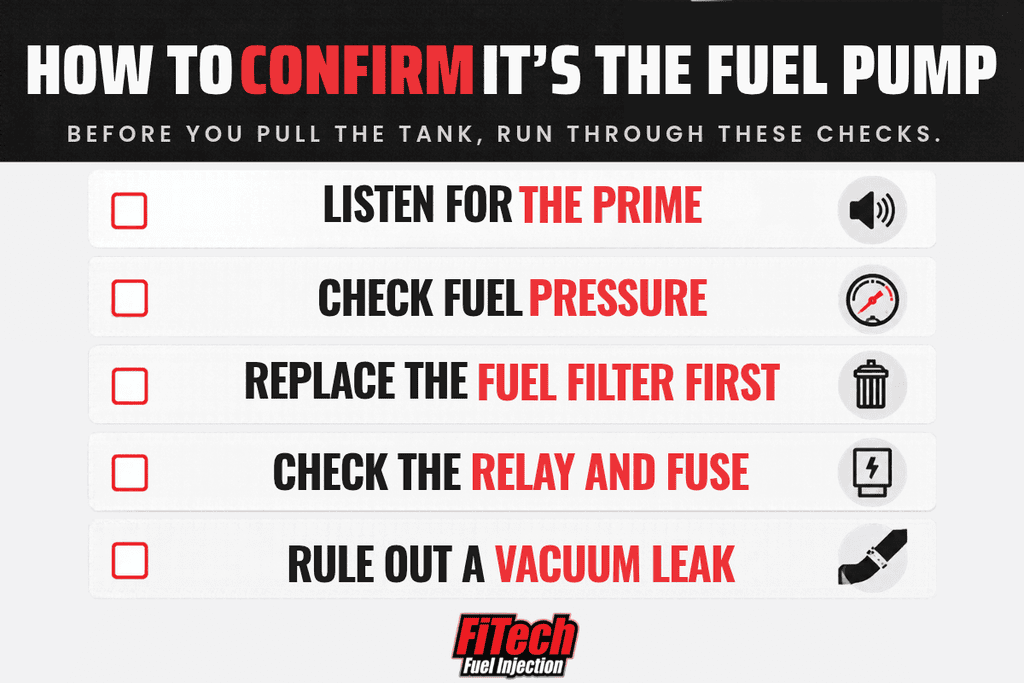
Before you pull the tank, run through these checks:
- Listen for the prime: turn the key to “on” without cranking. You should hear the pump hum for a second or two
- Check fuel pressure: install a fuel pressure gauge at the fuel rail. On a fuel injected vehicle, pressure should read around 58 to 60 PSI with the key on. If pressure is low, drops quickly, or doesn’t build at all, the pump or fuel pressure regulator may be the issue
- Replace the fuel filter first: a clogged fuel filter mimics a weak pump. On external pump setups, that’s the inline filter between the tank and pump. On in-tank setups, it’s the filter sock on the pump assembly. Recheck pressure after the swap before condemning the pump
- Check the relay and fuse: a faulty fuel pump relay or blown fuse will kill the pump entirely
- Rule out a vacuum leak: a vacuum leak causes lean conditions that feel like fuel starvation. Check vacuum lines at the intake manifold and throttle body
Replace the Pump and the Problem
If the pump is confirmed bad, replace it with one that matches your fuel system’s pressure and flow requirements. For EFI applications, the pump needs to deliver consistent pressure at 58 PSI with enough fuel flow to support your engine’s horsepower level.
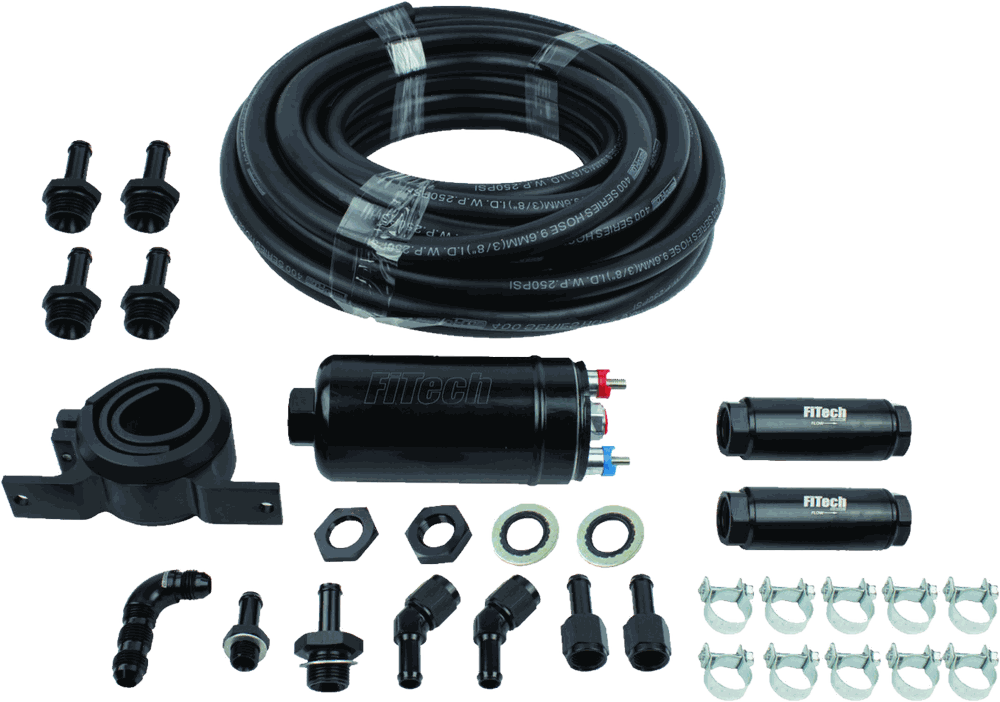
Everything You Need to Replace Your Fuel Pump
255 LPH inline electric pump, frame mount bracket, billet pre-filter and post-filter, and 40 feet of EFI-grade fuel hose. Supports engines up to 650 HP.
Shop the KitWe offer inline pumps, in-tank modules, and complete fuel delivery kits matched to our EFI systems. Not sure which setup fits your build? Call our tech team at (951) 340-2624 and we’ll help match the right pump to your engine.
Frequently Asked Questions
Can a bad fuel pump cause a check engine light?
A bad fuel pump can cause a check engine light, yes. A failing pump causes low fuel pressure, which leads to lean conditions, misfires, and diagnostic trouble codes like P0087 (fuel rail pressure too low) and P0171/P0174 (system too lean).
How long do fuel pumps last?
A modern electric fuel pump can last 100,000 miles or more with proper maintenance. The biggest factor is fuel level. Running the tank below a quarter consistently shortens pump life because the fuel acts as the pump’s coolant. Keeping a full tank, replacing the fuel filter on schedule, and using clean fuel all extend pump life.
Can I drive with a failing fuel pump?
You can drive with a failing fuel pump, but you shouldn’t. A weak pump losing pressure under load can cause fuel starvation, lean conditions, and potential engine damage. If you’re seeing fuel pump symptoms, get it replaced before it fails entirely.
Should I replace the fuel filter when I replace the fuel pump?
You should always replace the fuel filter when you replace the fuel pump, yes. A clogged filter is one of the most common causes of premature fuel pump failure. Installing a new pump behind a dirty filter means it’s already working harder than it should.
Is a whining fuel pump always bad?
A whining fuel pump is not always bad. Some electric pumps have a noticeable hum during normal operation, especially in-tank pumps. The concern is when the sound changes or gets louder, especially at low fuel level. Test with a fuel pressure gauge at the fuel rail if you’re unsure.
What’s the difference between a mechanical and electric fuel pump?
A mechanical fuel pump is driven by the engine’s camshaft and delivers fuel at low pressure (4-7 PSI), which works for a carburetor but not for EFI. An electric fuel pump runs independently and delivers fuel at the higher pressure EFI requires, typically around 58 PSI. If you’re converting to EFI, the mechanical pump needs to be replaced with an electric pump and a matched fuel delivery system.