
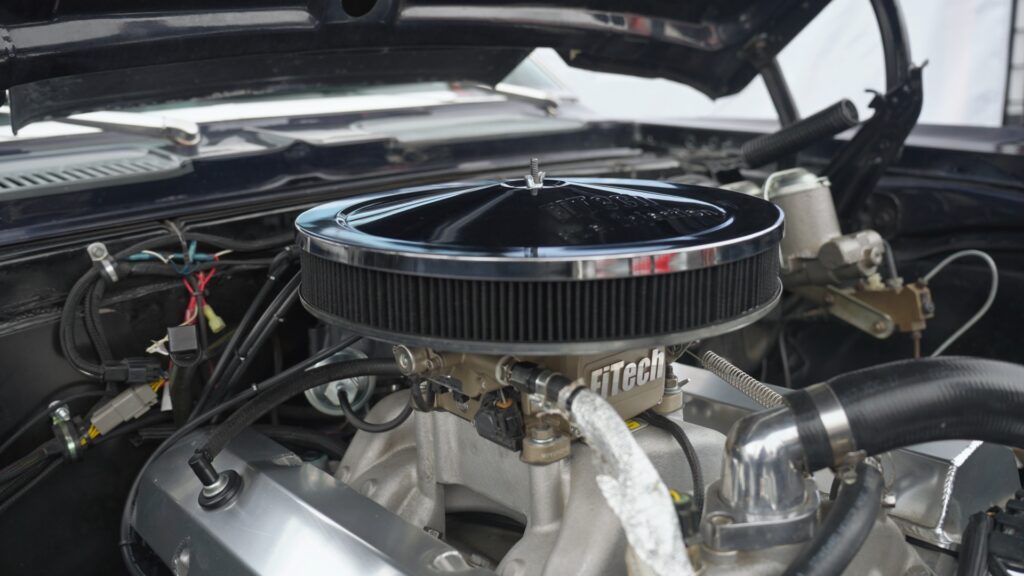
The Short Answer: Vapor lock happens when fuel in the line or pump gets hot enough to boil and turn from liquid fuel into vapor. A mechanical fuel pump can’t push vapor, so the engine starves for fuel and stalls. EFI prevents vapor lock by running fuel at higher pressure through a sealed system, keeping it in liquid form even at elevated temperatures.
If you’ve ever had a carbureted classic car stall in traffic on a hot day and refuse to restart, that’s vapor lock. It’s one of the most common and frustrating problems on carbureted builds, and it gets worse with modern ethanol fuel. The low-pressure fuel system, exposed fuel lines, and mechanical pump that worked fine for decades are now fighting against higher underhood temps and more volatile fuel blends.
EFI eliminates this problem. The combination of higher fuel pressure, a sealed fuel system, and a submerged electric fuel pump keeps fuel in liquid form under conditions that would shut a carbureted engine down.
What Causes Vapor Lock

How Vapor Lock Happens
Fuel is a liquid, but it has a boiling point. When fuel temperature rises above that point, it turns to vapor in the fuel line, mechanical pump, or float bowl. A mechanical fuel pump operates at low pressure, typically 4 to 7 PSI, and pulls fuel from the tank through the fuel line. It can move liquid fuel, but it can’t move vapor.
When vapor forms between the gas tank and the pump, the pump cavitates, and fuel flow stops. Then, the engine starves for fuel and stalls. In most cases, it won’t restart until the fuel cools back down to liquid form, and you’re stuck on the side of the road waiting for the engine bay to cool off.
What Makes It Worse
Vapor lock isn’t random. Specific conditions cause it, and most carbureted classics have at least a few of them:
- Engine bay heat: Fuel lines routed near the exhaust manifold or exhaust pipe absorb radiant heat and transfer it directly to the fuel
- Heat soak after shutdown: The engine compartment stays hot with no airflow, and fuel sitting in the lines and float bowl boils
- Low fuel level: Less liquid fuel in the gas tank means less mass to absorb heat and more air space above the fuel
- Ethanol fuel: Modern pump fuel contains ethanol, which has a lower boiling point than pure gasoline and vaporizes at lower temperatures. Adding as little as a few percent ethanol to gasoline measurably increases fuel volatility.
- Winter blend fuel: Winter blends are formulated with higher volatility for cold weather starting. That same volatility makes them more prone to vapor lock in warm conditions, especially during the spring and fall transition periods when winter blend fuel is still in the supply chain but temperatures are climbing
- Worn rubber lines: Old rubber fuel lines degrade over time, trap heat, and can soften or collapse under vacuum
- Loose or failing gas cap: A fuel cap that can’t maintain proper tank pressure lowers the fuel’s effective boiling point
- Blocked vent tube: A clogged tank vent tube prevents proper pressure equalization, which can contribute to vapor formation in the fuel supply
- Poor plumbing: fuel lines with too many curves or bends can restrict flow and cause fuel starvation, especially when heat softens the lines. Route fuel lines at a good angle with minimal bends between the tank and pump
Vapor Lock Symptoms and Common Fixes
How to Spot Vapor Lock
Vapor lock symptoms often overlap with other fuel delivery issues, which is why it’s misdiagnosed as a fuel pump problem or fuel filter clog. The key difference is that vapor lock is heat-related. If the problem only happens when the engine is hot, vapor lock is likely the cause.
Common vapor lock symptoms:
- Engine stalls in traffic or at idle after reaching operating temperature
- Hard restarts when hot, but starts fine when cold
- Loss of power or stumbling under load on hot days
- The engine runs fine at speed but dies when you slow down or stop
- Installing a fuel pressure gauge shows pressure dropping when underhood temps climb
If you can reproduce the problem on hot days and it goes away once the engine cools, you’re likely dealing with vapor lock.
What Classic Car Owners Try
Most classic car owners go through the same progression of fixes before landing on EFI:
- Heat shields or heat wrap on fuel lines near the exhaust pipe and exhaust manifold
- Rerouting fuel lines away from the engine bay heat sources
- Insulating or relocating the mechanical pump
- Adding an aftermarket electric pump as a pusher pump to help push fuel to the mechanical pump
- Dual electric fans to increase airflow through the engine compartment after shutdown
- A check valve between the pump and fuel rail to prevent fuel from draining back to the gas tank when the engine is off
- Swapping to a new pump, hoping the old one was the problem
Some of these help, but every “solution” is just treating a symptom, not the root cause. The fuel is still at low pressure, passes through exposed fuel lines, and sits in a float bowl. If the engine bay gets hot enough, none of these fixes will keep the fuel from boiling. Upgrading to EFI is the only fix that addresses the root cause.
How EFI Prevents Vapor Lock
Why EFI Doesn’t Vapor Lock
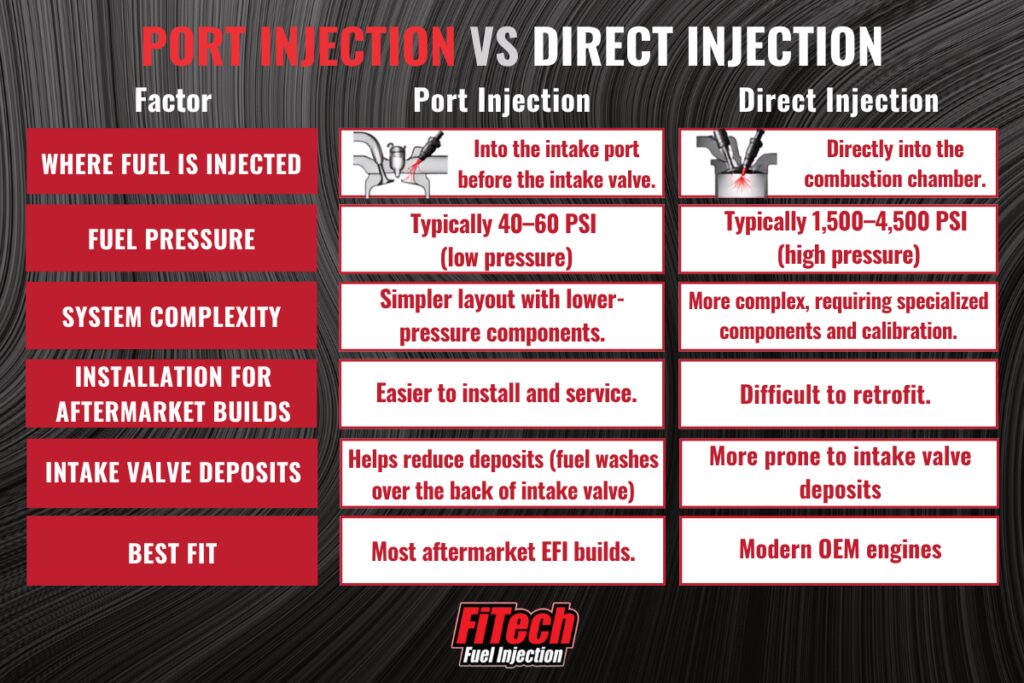
An electric fuel pump delivers fuel at 58 PSI through a sealed, pressurized fuel system. At that higher pressure, fuel stays in liquid form at much higher temperatures than a low-pressure carb setup can handle. Higher fuel pressure means fuel stays liquid longer, even in a hot engine bay.
In-tank electric pumps are submerged in fuel inside the gas tank, which keeps the pump cool and ensures it always has liquid fuel at the pickup. Fuel goes from the tank to the fuel rail to the injectors in a sealed loop. There’s no float bowl to boil or exposed fuel sitting in the engine compartment waiting to vaporize.
A carbureted system fights vapor lock with band-aids. EFI prevents it by design.
How Our Fuel Delivery Keeps It Solved
If the system includes a return line, unused fuel cycles back to the fuel tank, preventing heat soak in the fuel rail. On a returnless system like our Go Fuel in-tank modules, the regulator is at the tank, so fuel doesn’t sit under the hood any longer than it needs to.
For builds keeping a stock gas tank and supply line, our Force Fuel system pressurizes fuel through a surge tank with a submerged electric pump. Even if the supply line runs through a hot engine bay, the fuel going to the fuel rail is at full EFI pressure. No new feed line from the tank, no in-tank installation, and no new return line required.
Stop Fighting Vapor Lock
Vapor lock is a carbureted fuel system problem. Low pressure, exposed fuel lines, a mechanical pump pulling fuel through heat, and a float bowl sitting in the engine bay are the root cause. Heat shields, pusher pumps, and rerouted lines can help manage it, but they don’t fix it.
EFI eliminates vapor lock by running fuel at higher pressure through a sealed system with a submerged electric pump. The fuel stays liquid. The pump stays cool. The engine stays running.
If you’re tired of stalling in traffic, fighting hot restarts, or wrapping fuel lines in heat shielding, the fix isn’t another band-aid. It’s upgrading the fuel system entirely.
Check out our full lineup of throttle body EFI systems, Force Fuel, Go Fuel in-tank modules, and master kits to find the right setup for your build. Not sure where to start? Call our tech team at (951) 340-2624, and we’ll help match the right system to your engine.
Frequently Asked Questions
Can vapor lock damage my engine?
Vapor lock itself doesn’t cause mechanical damage, but the fuel starvation it creates can cause lean conditions that lead to overheating and detonation if you keep driving through it. Shutting the engine down and letting it cool is the safest response.
Does ethanol fuel make vapor lock worse?
Yes. Ethanol-blended fuel has a lower boiling point than pure gasoline, which means it vaporizes at lower temperatures. Winter blend fuel is even more volatile. If you’re running a carbureted classic on modern pump fuel, vapor lock risk is higher than it was when the car was new.
Will an electric fuel pump fix vapor lock on my carbureted engine?
An electric pusher pump can help by pushing fuel to the mechanical pump, but it doesn’t solve the root cause. The fuel system still operates at low pressure with exposed fuel lines and a float bowl. Upgrading to EFI with a matched fuel delivery system eliminates vapor lock by running the entire system at higher pressure.
Can I just insulate my fuel lines to prevent vapor lock?
Heat shields and line insulation reduce heat absorption, but they don’t prevent vapor lock in extreme conditions. The fuel is still at low pressure and still passes through a float bowl in the engine bay. If underhood temps get high enough, insulation alone won’t keep the fuel from boiling.
Does EFI completely eliminate vapor lock?
In a properly set up EFI system with the right fuel delivery, yes. The combination of higher fuel pressure, a sealed system, and a submerged electric fuel pump keeps fuel in liquid form under conditions that would cause vapor lock on a carbureted setup.