
The Short Answer: Port injection sprays fuel into the intake port before the intake valve. Direct injection sprays fuel straight into the combustion chamber. Both are forms of fuel injection, but direct injection is built for modern factory engines, while port injection is the better option for most classic cars, hot rods, street trucks, and aftermarket EFI builds.
A direct injection engine can deliver strong fuel economy, support a higher compression ratio, and help smaller turbocharged gasoline engines make more power. But it also needs a specialized cylinder head, high-pressure fuel pump, fuel rail, direct injectors, and engine-specific ECU calibration.
Port injection takes a simpler route. Fuel injectors mount in the intake manifold and spray fuel near the intake valve before it enters the cylinder. That makes a port injection engine easier to install, easier to service, and far more realistic for a Gen 1 small-block Chevy, classic muscle car, crate engine, or street truck.
How Each System Works
Port Injection
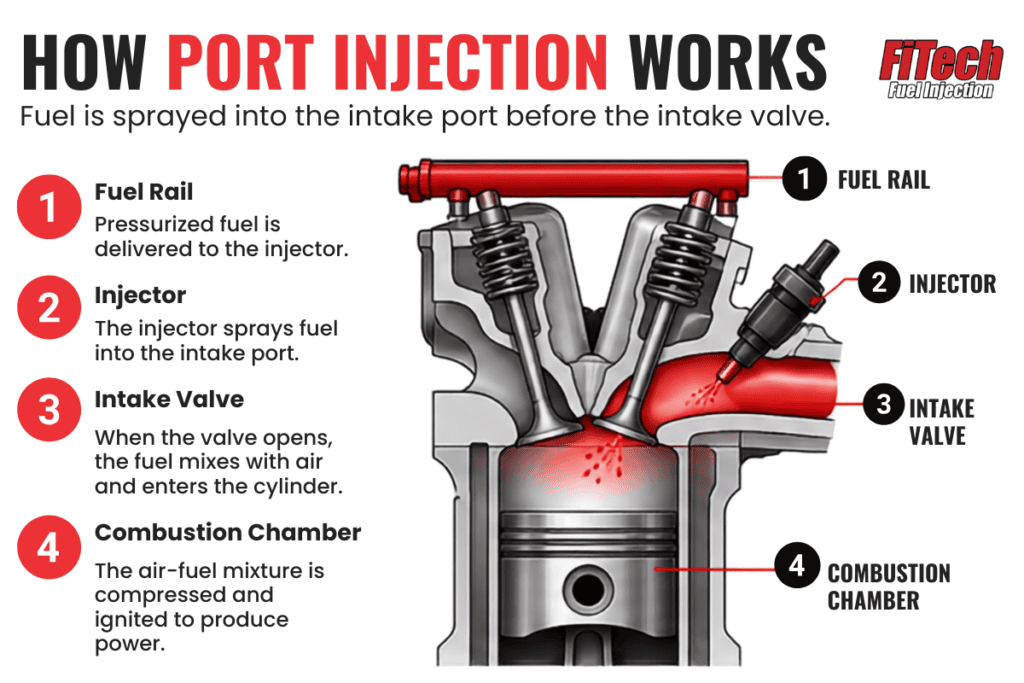
A port injection engine uses one port injector per cylinder. The injectors mount near the intake port, generally in the intake manifold, and spray fuel toward the back of the intake valve.
When the valve opens, air moves through the intake runner and carries the air-fuel mixture into the combustion chamber. The ECU controls injector timing and pulse width, determining fuel flow at idle, cruise, acceleration, cold starts, and higher RPM.
The fuel rail supplies every injector at stable EFI pressure. Most aftermarket port fuel injection systems operate around 58 PSI and need an electric fuel pump, EFI-rated fuel lines, filters, and reliable fuel delivery. If pressure drops under load, the engine can run lean and lose power.
Sequential port injection improves control by timing each injector to its cylinder’s intake event rather than firing injectors in groups. That gives you per-cylinder fuel control without building a high-pressure direct injection system.
Direct Injection

A direct injection engine puts direct injectors in the cylinder head. Instead of spraying fuel through the intake port, the injector fires fuel directly into the combustion chamber.
That requires a much higher-pressure fuel system. Port EFI commonly operates around 40 to 60 PSI. A direct injection system can operate from roughly 1,500 to 4,500 PSI, forcing fuel into a pressurized cylinder during the combustion cycle.
Direct fuel injection lets the ECU control exactly when fuel enters the cylinder. The fuel spray cools the air charge, helping reduce knock and allowing a higher compression ratio or more boost. That is why direct injection is common in many newer gasoline engines, diesel engines, and turbocharged EcoBoost engines.
The tradeoff is complexity. The cylinder head, high-pressure fuel pump, fuel rail, injector hardware, emissions equipment, catalytic converter, and ECU calibration all have to work as a matched system.
Why Port Injection Fits Aftermarket Builds
Direct injection makes sense when an OEM designs the complete engine around it. It can improve fuel mileage at cruise, support higher compression ratios, help lower emissions in certain conditions, and provide precise control at higher RPM.
For a classic or carbureted V8, that hardware is unnecessary. Retrofitting a DI engine setup means sourcing a specialty cylinder head, mechanically driven high-pressure fuel pump, direct injectors, high-pressure plumbing, sensors, and advanced fuel injection system calibration. That is not a practical conversion.
Port injection gives aftermarket builds the control they need without that factory-level complexity. A complete system needs an EFI-capable fuel pump, fuel rail, injectors, filters, wiring, ECU, and an intake manifold with injector provisions. That is real EFI hardware, but it is serviceable and straightforward. Our master kits bundle the EFI system, fuel delivery, wiring, and sensors together so you’re not sourcing any of it separately.
What Port EFI Delivers
For a street car, classic truck, or mild-cam small block, the goal is not to build a late-model direct injection engine from scratch. The goal is to start clean, idle well, respond to the throttle, and maintain reliable fuel delivery.
Port injection provides:
- Reliable cold starts without a choke
- Controlled fuel flow at idle, cruise, and wide-open throttle
- Easier access to the injector, fuel rail, and intake manifold
- Per-cylinder control with sequential EFI
- Lower fuel-system pressure and less complicated plumbing
- A practical route for crate engines, street cars, and performance trucks
For a basic carburetor replacement, throttle body EFI is also worth considering. It mounts where the carburetor sat and distributes fuel through the intake manifold. It is not port injection, but throttle body EFI is an easier conversion when individual injectors are not required.
The Carbon Buildup Difference
Why Direct Injection Builds Deposits
A direct injection engine sprays fuel into the combustion chamber, so fuel never reaches the intake valve. Oil vapor moving through the intake tract can stick to the hot valve surface and form carbon deposits over time. Intake-valve deposits are a known concern in gasoline direct-injection engines.
Heavy deposits can cause:
- Rough idle
- Misfires
- Weaker throttle response
- Reduced engine performance
- Lower fuel economy
- Spark plug fouling in severe cases
Why Port Injection Avoids It
On a port injection engine, fuel sprays near the intake valve every cycle. That fuel wash helps limit carbon buildup and keeps valve cleaning from becoming a regular service concern.
Direct injection owners can manage deposits with walnut blasting or catch cans, but neither replaces the fuel wash found in port fuel injection. Some modern gasoline engines use dual injection, combining both systems to get direct injection performance with the intake-valve benefits of port EFI.
Which Setup Is Right for You?

Keep Factory Direct Injection
If your vehicle came with direct injection from the factory, keep the direct injection system. Its fuel pump, cylinder head, ECU, sensors, and emissions equipment were designed to work together.
Choose Port EFI for a Retrofit
For a classic car, hot rod, older truck, or carbureted V8 conversion, port injection is the better option. It gives you individual injectors, controlled fuel delivery, manageable fuel pressure, and serviceable parts without trying to retrofit a direct injection system.
A sequential setup such as Go Port makes sense when you need per-cylinder fuel control and an intake manifold designed for EFI. It is a strong fit for:
- Small block Chevy, big block Chevy, and LS engines
- Ford 351 Windsor
- Crate engine builds and performance trucks
- Higher-horsepower street cars
Choose Throttle Body EFI for Simplicity
If you are simply replacing a four-barrel carburetor, throttle body EFI is the easier conversion. It bolts in where the carburetor sat and lets you retain your existing intake manifold.
For a matched EFI and fuel-delivery package, master kits combine the EFI hardware with the supporting components needed to complete the conversion.
Ready to Upgrade Your Fuel System?
Direct injection is a strong factory solution for fuel economy, high compression ratios, and compact turbocharged engines. But it is not the right fuel injection system for most aftermarket builds.
Port injection gives you clean intake valves, manageable fuel pressure, reliable cold starts, serviceable components, and enough fuel flow for serious street and performance builds. It is the better option when you want to drive your car, not engineer a direct injection retrofit.
Explore Go Port EFI systems, the full port injection lineup, and throttle body EFI systems to find the right setup. For an all-in-one package, check out master kits.
Not sure what fits your build? Call the FiTech tech team at (951) 340-2624 for help matching the EFI system, fuel pump, fuel delivery parts, and horsepower range to your engine.
Frequently Asked Questions
What is the main difference between direct injection and port injection?
Port injection sprays fuel into the intake port before the intake valve, allowing fuel and air to mix in the intake runner. Direct injection sprays fuel straight into the combustion chamber through injectors mounted in the cylinder head.
Which system uses higher fuel pressure?
Direct injection uses much higher pressure because fuel must be injected into a pressurized combustion chamber. Port EFI generally operates around 40 to 60 PSI, while direct injection can operate at thousands of PSI. That higher pressure is one reason a direct injection system needs specialized pumps, injectors, fuel rails, and ECU control.
Does direct injection improve fuel economy?
Usually, yes. Direct injection can improve fuel economy by delivering fuel more precisely and cooling the air charge in the cylinder, which supports a higher compression ratio and more efficient combustion. Those advantages are most useful in a modern factory engine designed around the system.
Is port injection better for a classic car or hot rod?
For most aftermarket builds, yes. Port injection is easier to retrofit, operates at manageable fuel pressure, uses accessible components, and works with EFI intake manifolds designed for classic engines. It is a practical choice for a carbureted V8, Gen 1 small-block Chevy, street truck, or crate-engine build.
What is dual injection?
Dual injection uses both port injectors and direct injectors on the same engine. The ECU can use one system or both depending on RPM, load, temperature, and emissions strategy. It gives manufacturers the benefits of direct injection at higher load and the intake-valve fuel wash associated with port fuel injection.
Does port injection prevent carbon buildup?
Port injection helps reduce intake-valve carbon buildup because fuel sprays near the intake valve during normal operation. Direct injection bypasses the valve, which is why intake-valve deposits are a more common concern on direct-injection gasoline engines.