
The Short Answer: Most EFI problems come down to a handful of common causes: clogged or faulty fuel injectors, fuel pressure issues, bad sensor readings, a low voltage or points style ignition system, or worn spark plugs. The fix is usually straightforward once you know where to look.
If your EFI system was running fine and now something feels off, resist the urge to start changing the tune. A rough idle, a misfire, a check engine light, or a drop in fuel economy almost always traces back to a mechanical or electrical issue, not the calibration. A dirty injector, a weak fuel pump, a lazy O2 sensor, or a fouled spark plug will cause problems that no amount of tuning will fix.
This guide covers the most common EFI and fuel injection problems, what causes them, how to spot them, and how to fix them.
Sensor and Ignition Issues
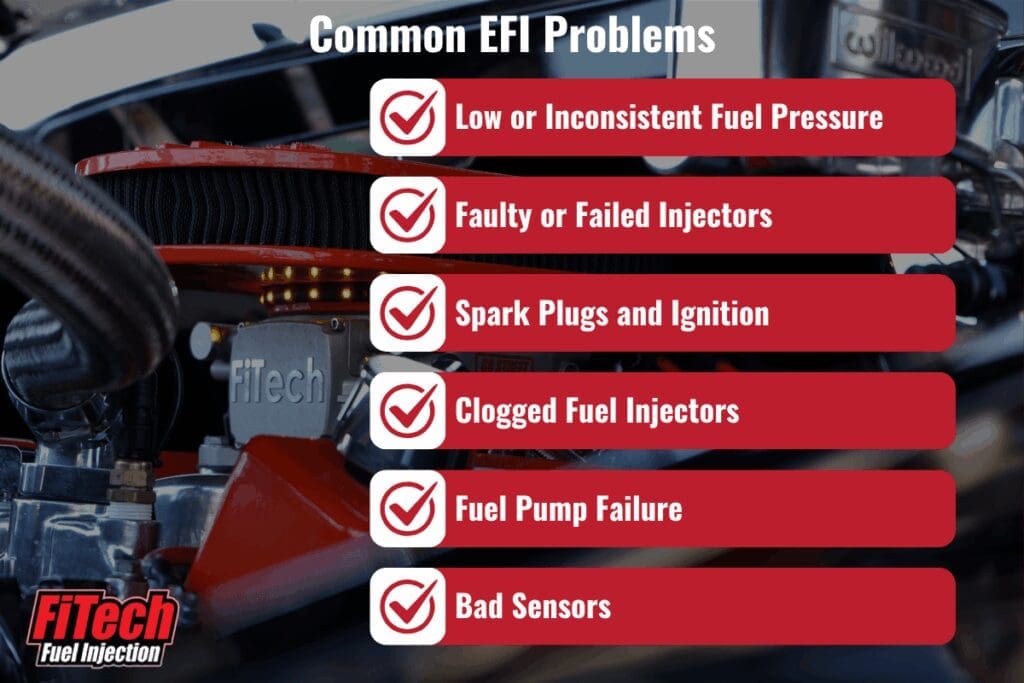
Not every EFI problem is a fuel problem. Bad sensor data and ignition failures cause symptoms that look a lot like an injector issue or fuel delivery issues. Before you replace injectors or tear into the fuel system, check the sensors and ignition side first.
Bad Sensors
The ECU makes fueling and timing decisions based on sensor input. If a sensor sends bad data, the ECU makes the wrong call and the engine suffers.
Coolant Temp Sensor
Affects cold start enrichment and warm-up fueling. A bad reading means the ECU adds too much or too little fuel during warm-up. Symptoms include cold start stumbles, rough idle when cold, and an engine that runs rich or lean until it reaches operating temperature.
Throttle Position Sensor (TPS)
Tells the ECU how far the throttle blade is open. An incorrect reading throws off idle fueling, accel enrichment, and throttle response across the board. If idle is erratic or the engine surges at steady cruise, check the TPS.
O2 Sensor
The ECU relies on the O2 sensor for closed-loop fuel correction. A lazy or failed O2 sensor means the ECU stops adjusting and runs on pre-programmed values only. Symptoms include poor fuel economy, a persistent rich or lean condition, and a check engine light.
MAP Sensor
MAP sensors read engine load on speed density systems. A bad MAP sensor throws off the entire fuel table because the ECU is calculating airflow from bad data. Symptoms include rough idle, hesitation under load, and poor performance across the RPM range.
Spark Plugs and Ignition
A fouled or worn spark plug causes misfires that feel exactly like a bad injector. Before you pull an injector, pull the plugs.
Common Symptoms
- Engine misfire on one or more cylinders
- Rough idle that smooths out at higher RPM
- Check engine light with misfire codes
- Poor combustion and increased fuel consumption
The Causes
Worn electrodes, incorrect gap, wrong heat range for the application, or carbon fouling from a rich condition. Ignition coil or coil pack failure causes the same symptoms. A dead coil means no spark to that cylinder, which mimics a dead injector.
The Fix
Pull the spark plugs and inspect them. Worn, fouled, or incorrectly gapped plugs should be replaced. If the plugs look fine, test the ignition coil or coil pack on the affected cylinder. Swap it to a different cylinder and see if the related misfire follows.
Check plugs and coils before blaming the injectors. Getting new plugs is faster, cheaper diagnosis and it rules out the ignition side completely.
Fuel Injector Problems
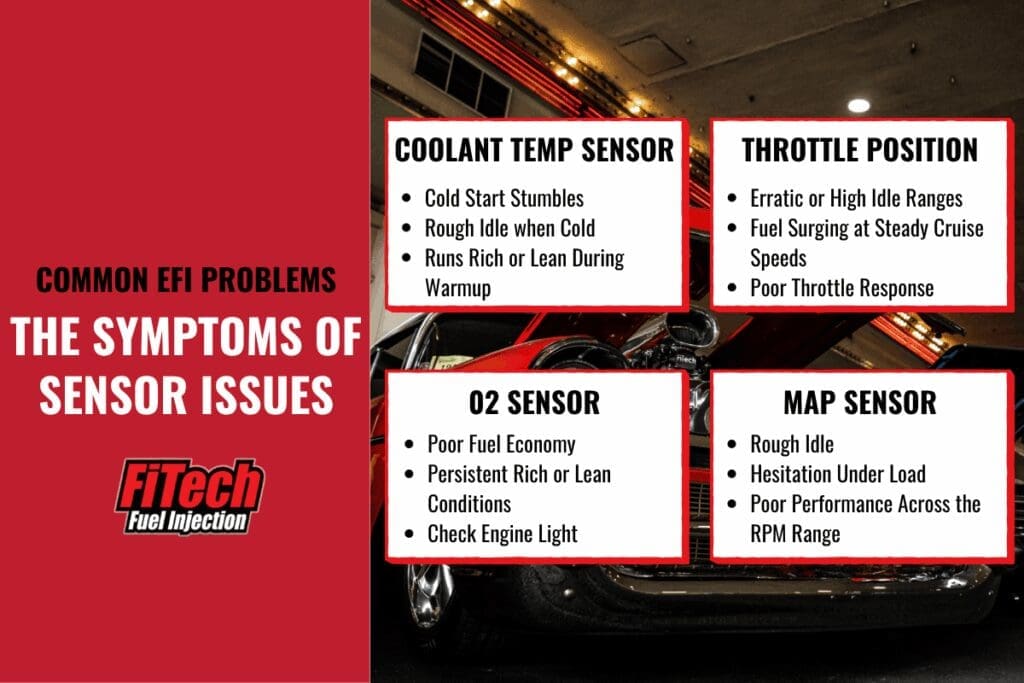
Fuel injectors are the most common source of EFI driveability issues. They’re precision components with tiny orifices, and it doesn’t take much to throw them off.
Clogged Fuel Injectors
A clogged can’t deliver the right amount of fuel to the combustion chamber. The spray pattern breaks down, atomization suffers, and that cylinder runs lean. Multiply that across several injectors and the whole engine feels off.
Common Symptoms
- Rough idling
- Engine misfire on one or more cylinders
- Poor fuel economy
- Hesitation or stumble under acceleration
- Check engine light with misfire-related codes
The Causes
Dirty fuel, poor filtration, and sitting. If the vehicle sat for months with fuel in the system, varnish and deposits build up inside the injector tips. Running fuel without proper filtration lets fine debris through that coats and clogs the orifices over time.
The Fix
The first thing to try is a quality fuel injector cleaner run through a full tank. If that doesn’t clear it up, the injectors may need professional ultrasonic cleaning or replacement.
This is why two-stage filtration matters. A pre-filter before the pump catches large debris. A post-filter after the pump catches the fine particles that clog injectors. Skip the filtration and you’re shortening injector life from day one.
Faulty or Failed Injectors
A faulty or bad fuel injector injector is different from a clogged one. It’s an electrical or mechanical failure, not a buildup issue.
Common Symptoms
- Dead cylinder with no fuel delivery
- Strong fuel smell from a leaking injector
- Fuel consumption spike with no change in driving
- Visible fuel leak at the fuel rail connection
- Check engine light with a cylinder-specific misfire code
The Causes
Electrical failure inside the injector, a stuck-open or stuck-closed pintle, a loose or corroded connector at the injector harness, or worn O-rings. The O-rings that seal the injector to the fuel rail and intake manifold wear over time. At 58 PSI, a worn O-ring is more than just a performance issue. Fuel seeping near the engine is a safety concern.
The Fix
Start by listening for injector click with the engine running. Each injector should produce an audible click as it opens and closes. A silent injector is either electrically dead or stuck closed.
You can also swap the suspect injector to a different cylinder. If the misfire follows the injector, you’ve found your problem. If it stays on the same cylinder, the issue is somewhere else, likely a spark plug or ignition coil.
Also check the injector harness and wiring before replacing anything. A loose connector or corroded pin at the injector plug can mimic a failed injector. If you see fuel weeping around the rail, replace the O-rings first and reassess.
Fuel Pressure and Delivery Issues
If the injectors are clean and firing but the engine still isn’t running right, the next place to look is fuel pressure and delivery. The injectors can only do their job if the fuel behind them is at the right pressure and fuel flow rate.
Low or Inconsistent Fuel Pressure
The ECU calibrates injector pulse width based on a specific fuel pressure. If that pressure drops or fluctuates, fueling goes off across the entire RPM range.
Common Symptoms
- Lean conditions under load
- Hesitation or stumble at wide open throttle
- Poor throttle response
- Engine runs fine at idle but falls on its face under demand
The Causes
A weak or failing fuel pump, a clogged fuel filter, or a failing fuel pressure regulator. On older builds, deteriorating fuel lines that expand under EFI pressure can also cause pressure drops. Any of these can reduce the 58 PSI your system needs to deliver consistent fueling.
The Fix
Check fuel pressure with a fuel pressure gauge at the fuel rail. It should hold steady at 58 PSI at idle and under load. If pressure drops under demand, the pump may not be flowing enough. If pressure bleeds off with the engine off, the regulator or check valve may be leaking.
Replace the fuel filter first. It’s the cheapest and easiest thing to rule out. If pressure is still low after that, test the pump and regulator separately.
Fuel Pump Failure
A dead fuel pump is obvious. The engine cranks but won’t start. A dying fuel pump is harder to catch because the symptoms show up more gradually.
Common Symptoms
- Whining or buzzing noise from the tank or pump location
- Hard starts, especially when hot
- Loss of power at wide open throttle
- Engine cuts out under hard acceleration or at low fuel levels
The Causes
Overheating from running the pump dry or with low fuel levels, electrical wear over time, or contamination from dirty fuel. External pumps typically run hotter than in-tank pumps because they aren’t submerged in fuel for cooling.
The Fix
If the pump is noisy or losing pressure under load, it’s time to replace it. For builds using FiTech’s Force Fuel system, a surge tank keeps the internal pump submerged at all times, which reduces heat and prevents starvation during hard driving or low fuel conditions. Our design extends pump life compared to a standalone external pump.
If you’re replacing a failed pump on an older setup, it’s worth considering an upgrade to a system with built-in protection against the conditions that killed the original.
Keep It Simple
Most EFI problems aren’t complicated. A bad sensor sends wrong data to the ECU. A worn spark plug causes a misfire. A clogged filter starves the injectors. A weak pump can’t hold pressure. The symptoms overlap, but the fixes are usually straightforward once you work through them in the right order.
Start with the cheap and easy stuff. Check sensor connections, pull the spark plugs, verify fuel pressure at the rail. Rule out the simple causes before you start swapping injectors or digging into the tune. Nine times out of ten, the problem is something basic that got overlooked during the install or wore out over time.
A properly set up EFI system with clean fuel, good filtration, and solid sensor connections will run reliably for a long time. FiTech’s throttle body EFI systems, fuel delivery kits, and master kits are designed to work together right out of the box. If you’re building a new setup or upgrading an existing one, starting with matched components eliminates most of these problems before they start.
 Article reviewed 04/12/2026:
 Fred Najera is the Tech Support Manager at FiTech Fuel Injection, bringing years of hands-on experience in the automotive industry. A lifelong car enthusiast, Fred has spent his career working with performance vehicles and helping enthusiasts get the most out of their builds. At FiTech, he leads the technical support team, assisting customers with installation, troubleshooting, and tuning to ensure their EFI systems perform as intended.
See more