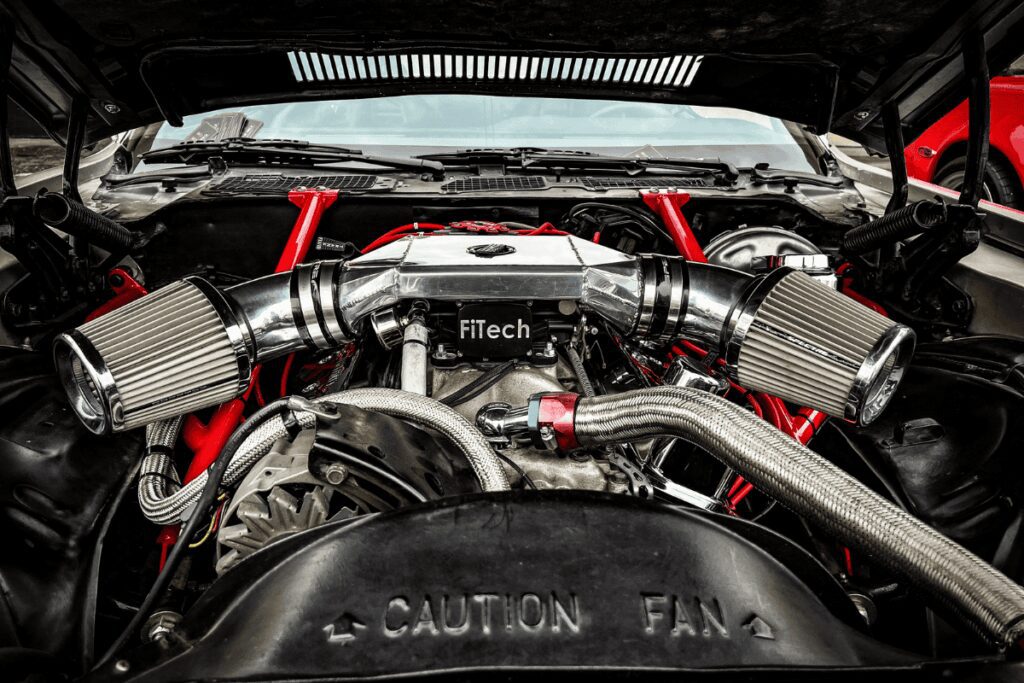
The Short Answer: There are several types of fuel injection systems, but the four main ones are throttle body injection (TBI), multi-point fuel injection (MPFI), sequential fuel injection (SFI), and direct injection. Each one delivers fuel differently, and the right choice depends on your build. For most classic car and hot rod EFI conversions, throttle body injection is the most practical option because it bolts onto your existing intake manifold with minimal modification.
Not all fuel injection systems work the same way. The difference comes down to where the fuel injectors are located and how fuel gets into the engine. Some systems spray fuel above the intake manifold, others deliver it at individual intake ports, and direct injection puts it straight into the combustion chamber.
The differences matter because it affects what kit fits your engine, how complex the install is, and what kind of performance and fuel efficiency you can expect. This guide breaks down each type of fuel injection system, how it works, and which one makes sense for your build.
How Fuel Injection Works (The Basics)
From Carburetor to Fuel Injection
A carburetor mixes air and fuel mechanically using vacuum and jets. It works, but it’s a passive system. The engine pulls air through a venturi, and fuel gets drawn in based on airflow. There’s no active measurement, no real-time correction, and no way to adjust for changing conditions without manual intervention.
Electronic fuel injection replaced carbs with a sensor-driven approach. An ECU reads data from sensors around the engine and uses it to control fuel injectors to deliver a precise air-fuel mixture on every cycle. The result is better fuel efficiency, more consistent engine performance, and cleaner, more efficient combustion across every driving condition.
For a deeper breakdown of how electronic fuel injection works and how it compares to a carburetor, check out our full guide: What Is an EFI?
Key Components All Systems Share
Regardless of the type, every fuel injection system uses the same core components:
- Fuel pump: an electric fuel pump delivers fuel from the fuel tank to the injectors at high pressure
- Fuel injectors: spray fuel into the intake or combustion chamber depending on the system type
- Fuel pressure regulator: maintains consistent fuel pressure across all operating conditions
- Fuel filter: catches debris before it reaches the injectors
- ECU: reads sensor data and controls injector timing, pulse width, and in many cases ignition timing
The difference between fuel injection systems isn’t the components themselves. It’s where the injectors sit and how fuel is delivered to the engine.
Types of Fuel Injection Systems
Throttle Body Injection (TBI)
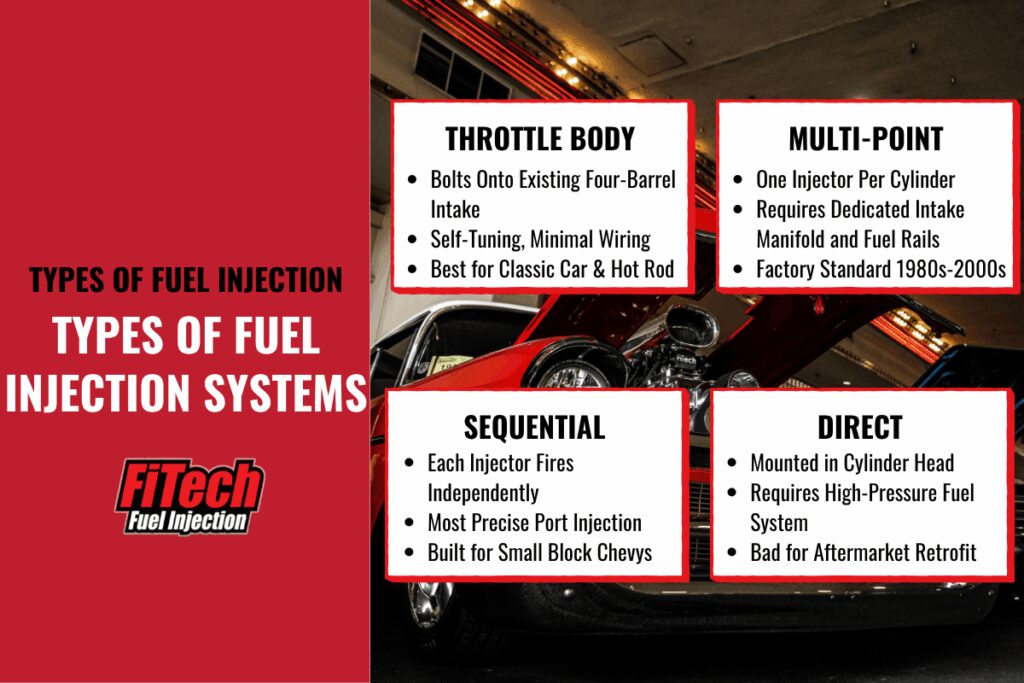
Throttle body injection is the most straight forward form of electronic fuel injection. One or two fuel injectors are mounted in a central throttle body unit that sits on top of the intake manifold, right where a carburetor would go.
The injectors spray fuel above the manifold, and the air-fuel mixture is distributed to each cylinder through the intake runners. It’s not as precise as systems with individual injectors per cylinder, but for most applications the ECU’s real-time corrections more than make up for it.
TBI is the most practical option for classic car and hot rod EFI conversions because:
- Bolts directly onto an existing four-barrel intake manifold
- No custom fuel rails or individual injector bosses required
- Self-tuning systems handle fueling automatically
- Minimal wiring and no separate ECU box to mount
FiTech’s entire throttle body EFI lineup is built around this design. It’s the fastest path from carburetor to fuel injection with the least amount of modification to your existing setup.
Multi-Point Fuel Injection (MPFI)
Multi-point fuel injection places one fuel injector at each intake port on the inlet manifold. Instead of spraying fuel above the manifold and splitting it across all cylinders, each cylinder gets its own dedicated injector.
The result is more precise fuel delivery than TBI. Each cylinder receives a more consistent air-fuel mixture, which improves fuel efficiency and engine performance. The trade-off is complexity. MPFI requires a dedicated intake manifold with fuel rails and individual injector bosses at each port.
On most MPFI systems, the injectors fire in groups (batch fire), meaning they don’t fire individually in time with each cylinder’s intake stroke. They all open at once or in pairs. This was the standard fuel injection system on most factory vehicles from the late 1980s through the 2000s.
For classic car builds, MPFI is a bigger undertaking than TBI. You need a compatible intake manifold, fuel rails, individual injector wiring, and a more involved ECU setup.
Sequential Fuel Injection (SFI)
Sequential fuel injection uses the same physical layout as MPFI, with one injector per cylinder at each intake port. The difference is timing. Each injector fires independently, in sequence, timed to the intake valve opening for that specific cylinder.
Because fuel is delivered right as the intake valve opens, sequential injection offers:
- More precise fuel delivery per cylinder
- Better fuel efficiency and fuel economy
- Lower emissions
- Smoother power delivery across the RPM range
Sequential injection is the standard on most modern gasoline engines and the most refined version of port injection available.
FiTech’s Go Port systems use sequential port injection for small block Chevy applications. It’s a step up from throttle body injection in terms of per-cylinder precision, but it requires a dedicated intake manifold and more involved installation.
Direct Injection
Direct injection takes fuel delivery one step further. The fuel injector is mounted in the cylinder head and sprays fuel directly into the combustion chamber, bypassing the intake manifold entirely.
This requires a high-pressure pump because the fuel must overcome combustion chamber pressure to enter the cylinder. The result is the most precise fuel delivery of any system, with the best fuel efficiency and tightest control over the air-fuel mixture.
Direct injection is common on modern factory engines from 2010 onward, in both gasoline and diesel applications. Modern diesel engines almost exclusively use direct injection systems.
For classic car and hot rod builds, direct injection is not a practical retrofit. It requires specialized cylinder heads with injector bosses machined into the combustion chamber, a high-pressure fuel system far beyond the 58 PSI that port and throttle body systems use, and ECU calibration that’s significantly more complex. It’s built for factory engineering, not aftermarket conversion.
Which Type Is Right for Your Build?
The type of fuel injection system that makes sense depends on your engine, your goals, and how involved you want the install to be.
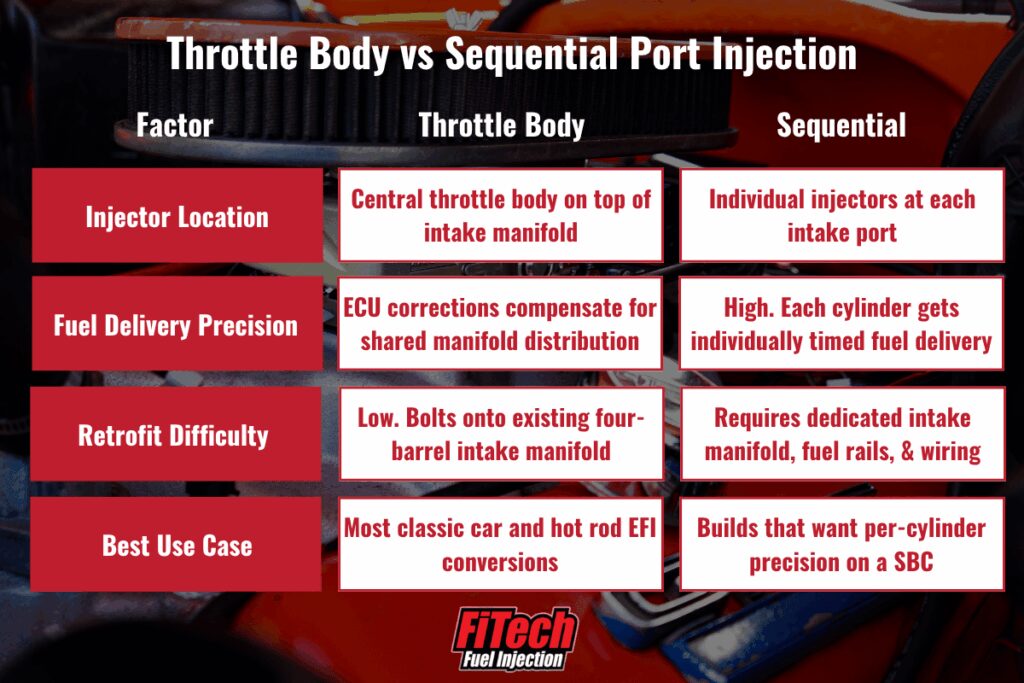
For most classic car and hot rod owners, throttle body injection covers everything you need. It bolts onto your existing intake, self-tunes out of the box, and delivers the fuel efficiency and driveability improvements that make EFI worth the conversion. FiTech’s entire throttle body EFI lineup is designed for this exact use case.
If your build calls for more per-cylinder precision, FiTech’s Go Port systems bring sequential port injection to small block Chevy applications. It’s a more involved install, but the fuel delivery and engine performance gains are there for builds that need them.
Direct injection is worth understanding, but it’s not something you’re going to retrofit onto a classic car or hot rod. Leave that one to the factory.
Find the Right System for Your Build
Every type of fuel injection system solves the same problem: getting the right amount of fuel into the engine at the right time. The difference is how precisely it does it and how much modification your build requires to make it work.
For most classic car and hot rod EFI conversions, throttle body injection is the answer. It’s the simplest install, works with your existing intake manifold, and FiTech’s self-tuning ECU handles the fueling from there. If you want per-cylinder precision on a small block, the Go Port lineup takes it a step further.
Check out FiTech’s full range of throttle body EFI systems, Go Port setups, and master kits to find the right fit for your engine and your build.
 Article reviewed 05/08/2026:
 Fred Najera is the Tech Support Manager at FiTech Fuel Injection, bringing years of hands-on experience in the automotive industry. A lifelong car enthusiast, Fred has spent his career working with performance vehicles and helping enthusiasts get the most out of their builds. At FiTech, he leads the technical support team, assisting customers with installation, troubleshooting, and tuning to ensure their EFI systems perform as intended.
See more